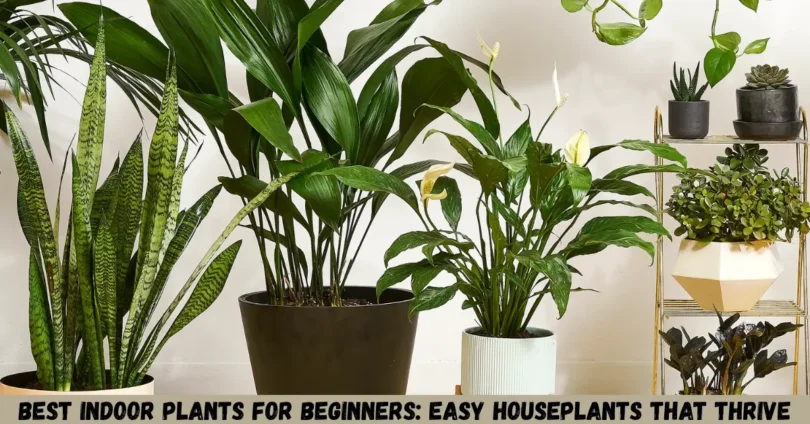

Best Indoor Plants for Beginners
Best indoor plants for beginners are usually hardy, adaptable houseplants that can handle occasional care mistakes and ordinary indoor conditions. If you are buying your first houseplant, options such as pothos, snake plant, spider plant, ZZ plant, and cast iron plant are practical choices because they generally tolerate a wider range of indoor conditions than more demanding plants.
Choosing the right plant is only half the job. You also need to understand its light, watering, drainage, temperature, and available space. A plant advertised as “low light” still needs enough light to grow; no houseplant can thrive in complete darkness.
This guide explains which indoor plants are easiest for beginners, where to place them, how often to water them, what mistakes to avoid, and how to choose a plant that fits your home.
What Makes an Indoor Plant Good for Beginners?
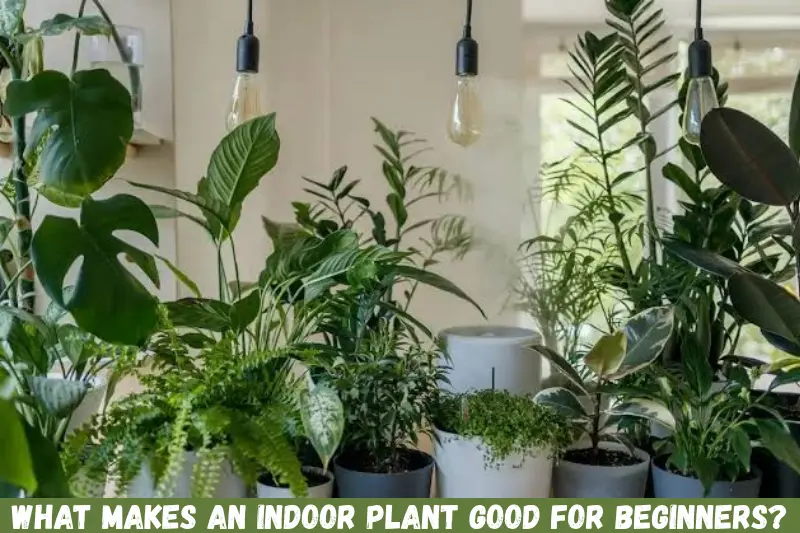
A beginner-friendly houseplant is generally one that is relatively forgiving when conditions are not perfect. It should not require a highly specialized environment, constant watering, or complicated maintenance.
The best beginner plants typically have some combination of these qualities:
- Tolerate occasional missed watering
- Adapt to average indoor conditions
- Grow in moderate or lower light
- Do not require frequent pruning
- Recover reasonably well from minor care mistakes
- Are readily available
- Have straightforward watering requirements
The Royal Horticultural Society recommends easy-care houseplants for beginners because they can tolerate a broader range of household conditions and may be more forgiving when watering or positioning is not perfect.
However, “easy care” does not mean “no care.” Every plant needs suitable light, water, and growing conditions.
10 Best Indoor Plants for Beginners
If you are starting your first indoor garden, these plants are worth considering.
1. Pothos
Pothos (Epipremnum aureum) is one of the most popular choices for beginners. It is a trailing or climbing foliage plant with attractive heart-shaped leaves and is known for being hardy and easy to grow.
Penn State Extension describes pothos as a versatile, hardy, very easy-to-grow houseplant and specifically identifies it as a good option for houseplant beginners.
Pothos can tolerate relatively low-light conditions, although stronger indirect light can support better growth. Allow the growing medium to dry before watering again rather than keeping it constantly wet.
Best for: Shelves, desks, hanging baskets and rooms with moderate or lower light.
Beginner tip: If the vines become too long, trim them with clean scissors and propagate healthy cuttings.
Important: Pothos is toxic to cats and dogs if eaten and can cause mouth irritation and other symptoms.
2. Snake Plant
The snake plant (Dracaena trifasciata) is another excellent choice for beginners. Its upright leaves give it a clean, architectural appearance, making it suitable for bedrooms, offices, hallways and living spaces.
The University of Minnesota Extension lists snake plant among houseplants suitable for low-light conditions.
Snake plants generally prefer allowing their growing medium to dry between waterings. One of the biggest mistakes beginners make is watering them too frequently.
Best for: Busy people, offices and spaces with limited natural light.
Beginner tip: Use a container with drainage holes and avoid leaving the plant sitting in excess water.
Pet note: ASPCA lists snake plant as toxic to dogs and cats, with ingestion potentially causing nausea, vomiting and diarrhea.
3. Spider Plant
The spider plant (Chlorophytum comosum) is a classic beginner houseplant. It produces long, arching leaves and can develop small plantlets, often called “babies,” on its stems.
Penn State Extension highlights spider plants as beginner-friendly and covers their light, watering, soil, container and propagation requirements.
Spider plants can adapt to indoor conditions and are particularly useful if you want a plant that can eventually be propagated into additional plants.
Best for: Bedrooms, kitchens, shelves and hanging baskets.
Beginner tip: Let excess water drain away after watering rather than allowing the pot to remain waterlogged.
One additional advantage for pet owners is that ASPCA lists spider plant as non-toxic to dogs and cats.
4. ZZ Plant
The ZZ plant (Zamioculcas) is a popular low-maintenance houseplant with glossy, attractive foliage. It is included by the University of Minnesota Extension among plants suitable for low-light indoor environments.
Its ability to cope with less frequent watering makes it attractive to beginners who are still developing a plant-care routine.
Best for: Offices, apartments, bedrooms and areas that do not receive strong natural light.
Beginner tip: Do not treat its low-light tolerance as a reason to keep it in a completely dark room. Even shade-tolerant plants need usable light.
5. Cast Iron Plant
The cast iron plant (Aspidistra) is known for its tolerance of challenging indoor conditions. The University of Minnesota Extension includes it among plants suitable for low-light environments.
Its broad foliage provides a simple green appearance without demanding the level of attention required by some decorative houseplants.
Best for: Lower-light rooms, offices and areas away from bright windows.
Beginner tip: Give it time to adjust after bringing it home instead of repeatedly moving it from one location to another.
6. Chinese Evergreen
Chinese evergreen (Aglaonema) is valued for attractive foliage and its ability to grow in lower-light indoor conditions. It is included on the University of Minnesota Extension’s low-light houseplant list.
Different varieties can have green, silver or patterned foliage, giving beginners several decorative options.
Best for: Living rooms, offices and shaded indoor spaces.
Beginner tip: Check the soil before watering. A calendar-based watering schedule can lead to unnecessary watering if the growing medium is still moist.
7. Parlor Palm
The parlor palm (Chamaedorea elegans) can bring a soft, tropical appearance to an indoor space. The University of Minnesota Extension lists parlor palm among houseplants that can grow under low-light conditions.
It can be a good choice if you want a plant with a different shape from common vine and upright foliage plants.
Best for: Living rooms, offices and shaded areas with indirect light.
Beginner tip: Avoid placing it directly against a very hot window or near a strong heat source.
8. Jade Plant
The jade plant (Crassula ovata) is a succulent with thick leaves that store water. It generally prefers bright light and a well-draining growing medium.
The RHS describes jade plants as easy-care houseplants and recommends allowing the compost to dry completely between waterings.
Best for: Sunny windowsills and bright rooms.
Beginner tip: Do not water simply because the calendar says it is watering day. Check the growing medium first.
9. Aloe Vera
Aloe vera is another succulent-style choice for beginners who have a bright location. Its fleshy leaves store water, so it generally does not need frequent watering.
Like other succulents, aloe benefits from good drainage and should not be kept constantly wet.
Best for: Bright windowsills and sunny indoor spaces.
Beginner tip: Use a well-draining cactus or succulent mix and a container with drainage holes.
If you have pets, check plant-safety information before buying. The ASPCA maintains a searchable database of toxic and non-toxic plants because plant safety can vary significantly between species.
10. Philodendron
Many philodendrons are popular foliage houseplants because they offer attractive leaves and can adapt to indoor growing conditions.
The University of Minnesota Extension includes philodendron among plants suitable for low-light environments.
Best for: Shelves, indoor plant stands and spaces with indirect light.
Beginner tip: Learn the specific requirements of the variety you purchase because different philodendron species and cultivars can have different growth habits.
Philodendron is also among the plants ASPCA identifies as containing insoluble calcium oxalates, which can cause irritation if pets chew or ingest the plant.
Best Indoor Plants for Beginners Compared
| Plant | Light Preference | Watering Approach | Beginner Friendly |
|---|---|---|---|
| Pothos | Low to moderate/indirect | Allow soil to dry before watering | Yes |
| Snake Plant | Low to bright indirect | Let growing medium dry | Yes |
| Spider Plant | Moderate indirect | Water when appropriate based on soil moisture | Yes |
| ZZ Plant | Low to moderate | Allow growing medium to dry | Yes |
| Cast Iron Plant | Low to moderate | Moderate, avoid waterlogging | Yes |
| Chinese Evergreen | Low to moderate | Check soil before watering | Yes |
| Parlor Palm | Low to moderate | Keep appropriately moist without waterlogging | Yes |
| Jade Plant | Bright light | Allow soil to dry thoroughly | Yes |
| Aloe Vera | Bright light | Water infrequently | Yes |
| Philodendron | Low to moderate/indirect | Water according to soil moisture | Yes |
These light categories are general guidance. The exact needs can vary by species, cultivar, season, window orientation and indoor environment.
How to Choose the Right Beginner Houseplant
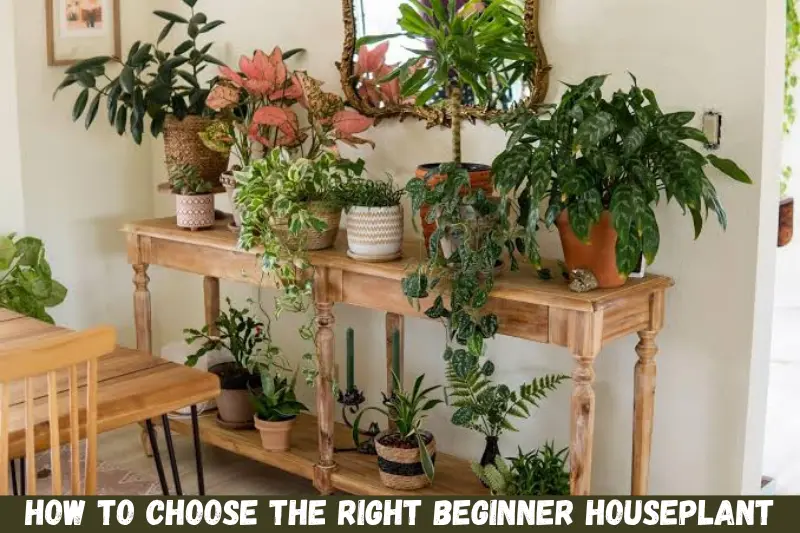
The easiest way to choose an indoor plant is to start with your home rather than the plant’s appearance.
Step 1: Check Your Available Light
Look at the location where you want to keep the plant.
Ask yourself:
- Is the area near a window?
- Does it receive direct sunlight?
- Is the light bright but indirect?
- Is the room relatively dark?
- Does sunlight change significantly throughout the day?
Different houseplants require different levels of light. The RHS divides common indoor conditions into categories such as full sun, bright indirect light and shade.
Step 2: Match the Plant to Your Routine
If you frequently forget to water plants, choose a plant that tolerates drier conditions.
If you enjoy regular plant care, you can consider varieties that require more attention.
Your lifestyle matters just as much as the appearance of the plant.
Step 3: Consider the Available Space
A small apartment may be better suited to compact plants or hanging varieties, while a larger living room can accommodate taller plants.
Also consider future growth. A small plant from the garden center may eventually become much larger.
Step 4: Check Pet Safety
If you have cats or dogs, investigate the exact plant species before bringing it home.
For example, ASPCA lists spider plant as non-toxic to dogs and cats, while snake plant and golden pothos are listed as toxic to dogs and cats.
Do not rely only on a common name because different plants can have similar names.
How Much Light Do Indoor Plants Need?
Light is one of the most important factors in successful indoor gardening.
A common beginner mistake is assuming that “low light” means “no light.” It does not.
The University of Minnesota Extension notes that low-light houseplants can work in areas such as a north-facing window or fairly dark corner, while still requiring sufficient light for growth.
The RHS similarly explains that no plant can tolerate complete darkness because plants need daylight to produce food.
Bright Indirect Light
Bright indirect light is suitable for many popular foliage plants. A location near a bright window, but protected from harsh direct sunlight, may work well.
Low Light
Low-light areas can suit plants such as snake plant, pothos, ZZ plant, cast iron plant and Chinese evergreen.
However, low light often means slower growth rather than unlimited tolerance.
Bright Direct Light
Succulents such as jade plants and aloe vera generally appreciate brighter conditions.
If leaves become scorched or bleached, the plant may be receiving excessive direct sunlight. Strong sunlight through glass can damage some houseplants.
How Often Should Beginners Water Indoor Plants?
There is no single watering schedule that works for every houseplant.
Instead of watering every plant on the same day each week, check the growing medium and consider the plant’s individual requirements.
The RHS recommends checking moisture rather than relying entirely on a fixed routine. It also notes that overwatering can cause serious problems, including root rot.
A simple beginner routine is:
- Check the surface and upper layer of the growing medium.
- Consider the plant’s specific watering requirements.
- Water thoroughly when the plant needs it.
- Allow excess water to drain.
- Empty standing water from decorative containers or saucers.
- Check again before the next watering.
Pothos, for example, should be watered when the soil is dry, while succulent plants such as jade have different moisture requirements.
Why Drainage Matters for Beginner Houseplants
Good drainage helps prevent water from remaining around plant roots for too long.
Choose containers with drainage holes whenever possible. The RHS specifically recommends containers with drainage holes so excess water can escape.
A decorative pot without a drainage hole can still be used as an outer cover, but the plant’s growing container should allow excess water to drain away.
Signs of Poor Drainage
Watch for:
- Constantly wet growing medium
- Yellowing leaves
- Mushy roots
- Stem problems
- Mold or persistent moisture
- Wilting despite wet soil
Importantly, wilting does not always mean the plant needs more water. Overwatering can also produce wilting symptoms.
Common Beginner Mistakes With Indoor Plants
Even the easiest houseplants can struggle when basic care requirements are ignored.
Overwatering
This is one of the most common problems.
Beginners often assume that more water means healthier plants. In reality, excessive moisture can damage roots.
Putting Plants in Complete Darkness
A plant may tolerate low light but cannot live indefinitely without usable light.
If a room has virtually no natural light, artificial grow lighting may help.
Ignoring Drainage
A beautiful decorative pot is not useful if water has nowhere to escape.
Always consider drainage before choosing a container.
Moving Plants Constantly
Plants need time to adjust to new conditions. Instead of moving a struggling plant every few days, observe its response and make one sensible change at a time.
Choosing Based Only on Appearance
A plant can look perfect in a store but struggle in your home if its light and watering requirements do not match your environment.
The RHS recommends considering the plant’s required care and whether your home provides suitable conditions before purchasing.
Buying Too Many Plants at Once
Start with one or two easy plants.
Learn how they respond to your home’s light, temperature and watering routine before expanding your collection.
How to Care for Your First Indoor Plant
Once you bring a plant home, keep the routine simple.
1. Find the Right Location
Place the plant according to its light requirements rather than simply choosing the most attractive corner.
2. Check the Soil Before Watering
Do not automatically water because several days have passed.
3. Use Proper Drainage
Make sure excess water can escape.
4. Inspect the Leaves
Look for yellowing, browning, pests, drooping or unusual spots.
5. Clean Dust From Leaves
Dust can accumulate on broad leaves. Gently cleaning foliage can help keep the plant looking healthy and can allow more light to reach the leaf surface.
6. Adjust Seasonally
Indoor conditions change throughout the year. Light levels, temperature and plant growth can all change, affecting watering needs.
The RHS notes that plants generally need less water during periods of lower light and slower growth.
Are Low-Light Indoor Plants Really Easy to Grow?
Yes, many are relatively easy, but “low light” should not be confused with “no light.”
Plants such as snake plant, pothos, ZZ plant, cast iron plant and Chinese evergreen can tolerate lower-light environments.
However, a plant placed in very poor light may grow slowly, become stretched or show other signs that conditions are not ideal.
If natural light is inadequate, artificial lighting can supplement the available light.
Which Indoor Plant Is Best for a Busy Person?
For someone who travels frequently or forgets watering, plants that tolerate drier conditions can be practical.
Snake plant, ZZ plant, pothos and some succulents are commonly considered suitable options, but each still requires appropriate light and watering.
Pothos is particularly useful because Penn State Extension notes that it is better kept somewhat dry than excessively wet, while excessive water can contribute to root rot.
The important lesson is not to find a plant that needs no care. Instead, choose one whose care requirements fit your routine.
Best Beginner Plants for Different Rooms
For a Bedroom
Consider:
- Snake plant
- Spider plant
- Pothos
- ZZ plant
Choose based on the bedroom’s actual light rather than the room name.
For a Living Room
Consider:
- Pothos
- Chinese evergreen
- Parlor palm
- Philodendron
- Spider plant
A living room with a bright window gives you more choices than a dark interior corner.
For an Office
Consider:
- ZZ plant
- Snake plant
- Pothos
- Cast iron plant
These can work well when natural light is limited, provided the space still receives adequate usable light.
For a Sunny Windowsill
Consider:
- Jade plant
- Aloe vera
- Other suitable succulents
These plants generally make more sense in brighter locations than shade-tolerant foliage plants.
Beginner Houseplants and Pet Safety
Plant selection should include safety considerations if pets live in your home.
The ASPCA notes that some common houseplants can cause gastrointestinal irritation or other symptoms when pets chew or ingest them.
For example:
- Spider plant: listed as non-toxic to dogs and cats.
- Snake plant: listed as toxic to dogs and cats.
- Golden pothos: listed as toxic to dogs and cats.
- Philodendron: included among plants containing insoluble calcium oxalates.
If you have pets or young children, research the exact species before purchase and keep potentially harmful plants out of reach.
Frequently Asked Questions
What is the easiest indoor plant for a beginner?
Pothos, snake plant, spider plant and ZZ plant are among the most practical choices for beginners. They are generally adaptable and can tolerate less-than-perfect conditions better than many demanding houseplants. The best choice still depends on your home’s light, watering habits, available space and whether you have pets.
What is the best indoor plant for low light?
Snake plant, pothos, ZZ plant, cast iron plant and Chinese evergreen can be suitable for lower-light indoor environments. However, low light does not mean complete darkness. Plants still require enough usable light to photosynthesize and grow. If natural light is inadequate, supplemental artificial lighting may be useful.
How often should beginners water houseplants?
There is no universal watering schedule. Check the growing medium and consider the individual plant’s requirements before watering. Many beginner problems result from watering too frequently. Allowing excess water to drain and avoiding permanently waterlogged soil are important parts of good houseplant care.
Which indoor plant is safest for homes with pets?
Spider plant is listed by ASPCA as non-toxic to dogs and cats, making it a useful option for pet-owning households. However, “non-toxic” does not mean pets should routinely eat plants. Always verify the exact species because similar-looking plants can have very different safety profiles.
Can indoor plants survive without sunlight?
Indoor plants cannot survive indefinitely in complete darkness because they need light for photosynthesis. Some houseplants tolerate low-light conditions, but they still need usable light. In rooms where natural light is insufficient, an appropriate artificial grow light can supplement the available light and support plant growth.
Conclusion
The best indoor plants for beginners are not necessarily the most unusual or expensive varieties. They are plants that match your home’s conditions and your ability to care for them consistently.
Pothos, snake plant, spider plant, ZZ plant, cast iron plant, Chinese evergreen and other adaptable houseplants can be excellent starting points. For brighter spaces, jade plant and aloe vera offer beginner-friendly succulent options.
If you are buying your first houseplant, start with one easy-care variety, place it where its light requirements can be met, and spend a few weeks learning how quickly its growing medium dries. That simple approach will help you build confidence before expanding your indoor garden.