
Introduction
Front yard landscaping ideas can transform an ordinary entrance into a welcoming, attractive, and functional outdoor space. Whether you have a small front yard, a large lawn, a narrow entrance, or a low-maintenance garden, the right combination of plants, pathways, lighting, edging, and hardscaping can make a noticeable difference.
A good front yard design should do more than look attractive. It should complement the architecture of your home, suit your local climate, remain practical to maintain, and create a clear route from the street or driveway to the front door.
In this guide, you’ll find practical front yard landscaping ideas for different budgets, yard sizes, styles, and maintenance preferences. You’ll also learn how to plan your space, choose suitable plants, avoid common mistakes, and create curb appeal without making the yard difficult to manage.
What Is Front Yard Landscaping?
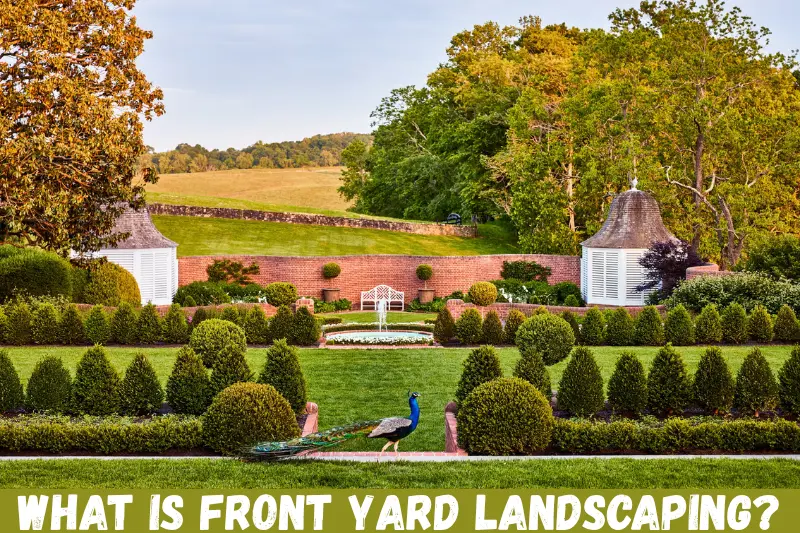
Front yard landscaping is the process of designing and arranging plants, lawns, pathways, garden beds, trees, lighting, decorative features, and other outdoor elements around the front of a home.
The best design balances beauty, function, maintenance, and proportion. For example, a front yard might combine a simple lawn with foundation plants, a curved walkway, low shrubs, and a few seasonal flowers.
A successful landscape should also make the entrance easy to use. Plants should not block the pathway, trees should be positioned thoughtfully, and landscaping elements should work with the existing structure rather than compete with it.
25 Front Yard Landscaping Ideas to Try
1. Create a Welcoming Entry Pathway
A well-designed walkway immediately gives the front yard more structure.
You can use concrete, natural stone, brick, pavers, gravel, or other suitable materials depending on your home’s style and local conditions.
For a more natural appearance, soften the edges of the walkway with:
- Low-growing plants
- Ornamental grasses
- Flower beds
- Small shrubs
- Ground covers
- Landscape edging
Keep the route to the front door clear and comfortable to walk on.
2. Add Layered Flower Beds
Layering plants at different heights creates depth and makes a garden look more intentional.
Place taller plants toward the back, medium-sized plants in the middle, and shorter plants or ground covers near the front edge.
For example:
Back: Small shrubs or ornamental grasses
Middle: Flowering perennials
Front: Low-growing flowers or ground covers
This approach works particularly well along the front of a house or beside a walkway.
3. Use Low-Maintenance Plants
If you don’t want to spend every weekend maintaining your yard, choose plants suited to your local growing conditions.
Low-maintenance landscaping can include:
- Drought-tolerant plants where appropriate
- Native or regionally adapted plants
- Perennials
- Hardy shrubs
- Mulched planting beds
- Ground covers
Remember that a plant described as low-maintenance still needs suitable light, soil, water, and seasonal care.
4. Design a Small Front Yard
Small spaces don’t need to feel boring.
One of the most effective small front yard landscaping ideas is to limit the number of major elements and give each one a clear purpose.
Consider combining:
- A narrow pathway
- One small tree
- Compact shrubs
- A defined flower bed
- Vertical planting
- Simple outdoor lighting
Avoid filling every available area with plants and decorations. Leaving some open space can make a small yard feel larger.
5. Add a Small Ornamental Tree
A carefully positioned tree can become the focal point of a front yard.
Choose a species based on mature size, climate, soil conditions, available space, and maintenance requirements. Avoid planting a tree simply because it looks attractive when young.
Before planting, consider:
- Mature height
- Mature canopy width
- Root characteristics
- Distance from buildings
- Utility lines
- Sidewalks and driveways
- Local planting conditions
The right tree can provide structure for years, while the wrong tree can eventually create maintenance problems.
6. Build a Modern Minimalist Landscape
Modern front yard landscaping often works best with clean lines and a limited plant palette.
You can create a contemporary appearance with:
- Geometric planting beds
- Simple paving
- Ornamental grasses
- Evergreen shrubs
- Gravel or stone
- Minimal outdoor décor
- Simple lighting
The key is consistency. Using too many unrelated materials, colors, or plant types can make a minimalist design look cluttered.
7. Create a Cottage-Style Garden
For a softer and more relaxed appearance, consider a cottage-inspired front yard.
Mix flowers, shrubs, herbs, and other suitable plants in a less formal arrangement. A cottage garden can work especially well around traditional-style homes.
Use repetition rather than making every plant different. Repeating several plant varieties throughout the yard helps the landscape feel connected.
8. Add Decorative Landscape Edging
Edging separates lawns, planting beds, paths, and other areas.
It can be made from:
- Stone
- Brick
- Metal
- Concrete
- Timber where appropriate
- Other landscape edging products
Good edging creates cleaner boundaries and makes maintenance easier. It also prevents lawn grass from gradually spreading into garden beds.
9. Use Mulch Around Planting Beds
Mulch can improve the appearance of garden beds while helping the soil retain moisture and suppressing some weed growth.
Organic mulch options may include materials such as wood chips or shredded bark.
When applying mulch, avoid piling it directly against tree trunks or plant stems. Excessive mulch can create moisture and pest-related problems.
10. Install Outdoor Landscape Lighting
Lighting can make pathways and planting areas easier to navigate after dark while adding visual interest.
Useful locations include:
- Along walkways
- Near steps
- Around planting beds
- Near the front entrance
- Around architectural features
Choose lighting that provides enough visibility without producing unnecessary glare. Solar fixtures can be convenient in suitable locations, while wired systems may provide more consistent performance.
11. Replace Some Lawn With Garden Beds
A large lawn can require regular mowing and watering. If you don’t need all that grass for recreation, consider converting part of it into planting areas.
You might replace selected lawn sections with:
- Native or adapted plants
- Shrubs
- Ornamental grasses
- Ground covers
- Trees
- Decorative stone
Don’t remove lawn simply for the sake of removing it. Design the replacement area around your climate, soil, drainage, and maintenance goals.
12. Try a Rock Garden
Rock gardens can provide an attractive solution for suitable climates and landscapes.
Combine rocks with plants that naturally suit dry or rocky conditions. The arrangement should look intentional rather than like random stones placed throughout the yard.
Use varying rock sizes and leave enough space for plants to grow.
13. Add a Simple Water Feature
A small fountain or other water feature can become a focal point.
For a front yard, keep the feature proportional to the available space. A huge installation can overwhelm a small property, while a modest fountain may work well near an entrance or planting bed.
Consider maintenance requirements before installation, including cleaning, water management, and equipment care.
14. Create a Pollinator-Friendly Garden
A front yard can also provide habitat and food sources for pollinators.
Choose suitable flowering plants that provide nectar or pollen and are appropriate for your local environment.
A pollinator-friendly landscape can include:
- Flowering perennials
- Native plants
- Shrubs
- Herbs
- Different flowering periods
Avoid assuming that every flowering plant is equally valuable for local wildlife. Regional plant selection matters.
15. Use Raised Garden Beds
Raised beds can define planting areas and give the landscape a structured appearance.
They are particularly useful when you want to separate flowers, herbs, or other plants from the lawn.
Before installing one, consider its height, materials, drainage, accessibility, and relationship to the rest of the landscape.
16. Create a Desert-Inspired Front Yard
In dry climates, a water-conscious landscape can combine decorative stone, carefully selected plants, and limited lawn.
Suitable plants vary by region, so choose species that are adapted to your local conditions rather than simply selecting plants because they are marketed as drought-tolerant.
A desert-inspired design can use:
- Gravel
- Boulders
- Succulents where appropriate
- Drought-adapted shrubs
- Ornamental grasses
- Simple pathways
17. Add Privacy With Plants
If your front yard faces a busy street or neighboring property, plants can provide visual screening.
Options include:
- Shrubs
- Hedges
- Small trees
- Trellises with suitable vines
- Layered planting
Avoid placing dense vegetation where it blocks visibility needed for vehicles, pedestrians, or entrances.
18. Highlight the Front Door
Your front entrance should remain one of the most noticeable areas of the landscape.
You can draw attention to it with symmetrical or balanced planting, a defined pathway, planters, lighting, or a small focal tree.
Avoid creating such a dense planting area around the door that the entrance becomes difficult to see.
19. Use Planters for Instant Flexibility
Containers are useful when you want to change the appearance of your front yard without rebuilding the landscape.
Place planters:
- Beside the front door
- Near the porch
- Along a pathway
- Around a seating area
- Near the driveway where safe
Choose container sizes that complement the scale of your home. Very small pots can disappear visually beside a large entrance.
20. Landscape Around a Driveway
The driveway doesn’t have to be an isolated slab of pavement.
Planting beds along its edges can soften hard surfaces and visually connect the driveway to the rest of the yard.
Use plants that tolerate the conditions around the driveway and keep mature growth away from areas where it could interfere with vehicles.
21. Use Ornamental Grasses
Ornamental grasses can add texture and movement to a landscape.
They work well as:
- Border plants
- Foundation planting
- Focal plants
- Repeated accents
- Transitional plants between hardscape and garden beds
Select species based on local climate, mature size, sunlight, and water requirements.
22. Create a Symmetrical Design
Symmetry can create a formal and organized appearance.
For example, matching planters or similar shrubs can be positioned on both sides of the front entrance.
Symmetry isn’t necessary for every home, however. An asymmetrical design can feel more natural and relaxed while still maintaining visual balance.
23. Add a Seating Area
If space allows, a small bench or seating area can make the front yard more functional.
Position seating where it doesn’t obstruct the walkway or driveway.
A simple bench surrounded by plants can create a welcoming entrance without requiring a large patio.
24. Use Ground Covers in Difficult Areas
Ground covers can help fill spaces where maintaining traditional lawn may be difficult.
They can be useful around trees, along borders, or in selected areas with appropriate growing conditions.
Before planting, check how quickly the species spreads and whether it is considered invasive in your area.
25. Keep the Design Simple and Repetitive
One of the most useful landscaping principles is repetition.
Instead of buying dozens of unrelated plants, select a smaller group and repeat them throughout the landscape.
For example, you might use the same shrub along the pathway and repeat the same flowering plant near the entrance.
This creates visual continuity and can make the landscape easier to maintain.
How to Plan Your Front Yard Landscaping
Before buying plants or materials, create a simple plan.
Step 1: Measure the Space
Measure the approximate dimensions of your front yard.
Mark:
- Property boundaries
- House walls
- Driveway
- Sidewalks
- Existing trees
- Utility features
- Drainage areas
- Existing garden beds
Accurate measurements help prevent purchasing plants or materials that don’t fit.
Step 2: Study Sunlight and Shade
Observe how sunlight moves across the yard during the day.
Some plants need full sun, while others perform better with partial shade or shade. Matching plants to the available light is one of the easiest ways to avoid unnecessary plant loss.
Step 3: Check Soil and Drainage
Pay attention to whether water drains quickly or remains in particular areas after rainfall.
Soil texture, drainage, pH, and organic matter can influence which plants perform well.
If you’re unsure about your soil, a local soil test can provide useful information.
Step 4: Choose a Landscape Style
Decide whether you want the space to look:
- Modern
- Traditional
- Natural
- Cottage-inspired
- Minimalist
- Tropical where climate allows
- Water-conscious
- Formal
A clear style makes it easier to choose compatible materials and plants.
Step 5: Select Plants for the Location
Don’t choose plants based only on appearance.
Consider:
- Local climate
- Sunlight
- Soil
- Mature size
- Water needs
- Maintenance
- Seasonal appearance
- Potential pest or disease issues
Step 6: Install Hardscape First
If your project includes a walkway, edging, retaining structure, lighting infrastructure, or other hardscape, complete those elements before planting wherever practical.
This reduces the chance of damaging new plants during construction.
Step 7: Plant and Finish the Beds
Once the main structure is ready, install plants according to their mature spacing requirements.
Finish the beds with suitable mulch or another appropriate surface treatment.
Front Yard Landscaping Ideas for Different Budgets
Your landscaping budget doesn’t have to determine whether the yard looks attractive. The scope of the project can be adjusted.
| Budget Approach | Possible Improvements |
|---|---|
| Lower budget | Mulch, DIY planting, edging, planters, pruning and cleanup |
| Moderate budget | New planting beds, shrubs, pathway improvements, landscape lighting |
| Larger budget | Professional design, extensive hardscape, mature trees, irrigation improvements |
Start with the areas that make the biggest visual difference. A well-maintained entrance, defined pathway, healthy plants, and clean garden beds can often improve the overall appearance without completely redesigning the property.
Low-Maintenance Front Yard Landscaping Tips
A low-maintenance yard doesn’t mean a maintenance-free yard.
To reduce ongoing work:
- Select plants suited to your climate.
- Group plants with similar water requirements.
- Reduce unnecessary lawn areas.
- Use mulch appropriately.
- Choose plants based on mature size.
- Install efficient irrigation where appropriate.
- Keep pathways and planting boundaries clearly defined.
- Prune plants according to their needs rather than constantly trimming them into unnatural shapes.
The goal is to create a landscape that works with your environment rather than constantly fighting it.
Common Front Yard Landscaping Mistakes
Choosing Plants Without Considering Mature Size
A small plant at the garden center may eventually become much larger.
Always check the expected mature dimensions before planting close to buildings, windows, sidewalks, or utilities.
Planting Too Many Different Species
Variety can be attractive, but excessive variety can make a yard look disconnected.
Repeat selected plants to create rhythm and consistency.
Ignoring Drainage
Poor drainage can damage plants and create other landscape problems.
Observe how water moves through the property before finalizing your planting design.
Blocking the Front Entrance
Large shrubs or dense plants should not hide the front door or interfere with access.
The entrance should remain visually obvious and physically accessible.
Forgetting Future Maintenance
A landscape can look beautiful when first installed and become difficult to manage later.
Consider how much mowing, pruning, watering, fertilizing, cleaning, and seasonal care you’re realistically willing to do.
Using Inappropriate Plants
A plant that thrives in one region may struggle badly in another.
Local growing conditions should influence your plant choices.
How to Make a Front Yard Look Expensive
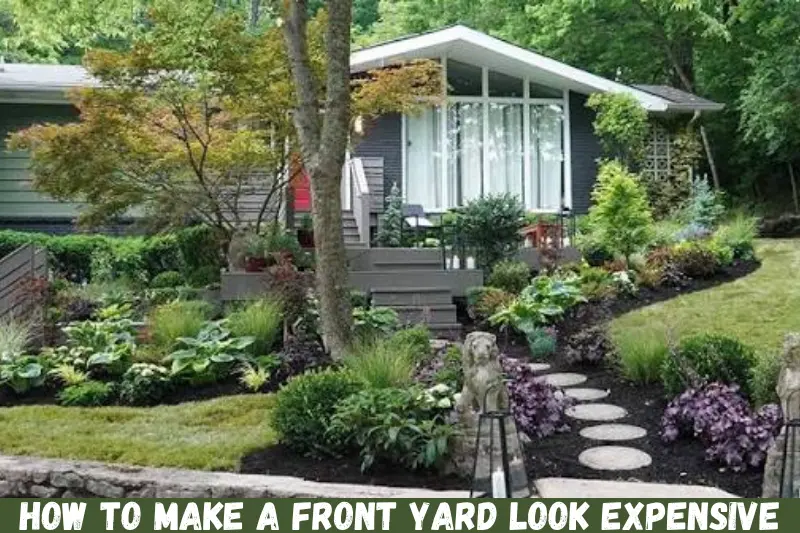
You don’t necessarily need expensive materials to create a polished appearance.
Focus on a few high-impact details:
- Keep lawn edges clean.
- Define planting beds.
- Repeat a small selection of plants.
- Keep pathways clear.
- Use appropriately sized plants.
- Add subtle lighting.
- Keep the front entrance visually prominent.
- Maintain mulch and garden beds.
- Remove dead or damaged growth regularly.
- Keep the overall design consistent with the home’s architecture.
Good proportions and regular maintenance often contribute more to a polished appearance than simply adding expensive decorations.
Front Yard Landscaping Ideas for Curb Appeal
For homeowners primarily interested in curb appeal, concentrate on what is visible from the street.
The strongest areas to prioritize are usually the front door, walkway, driveway edge, major planting beds, and the transition between the home and lawn.
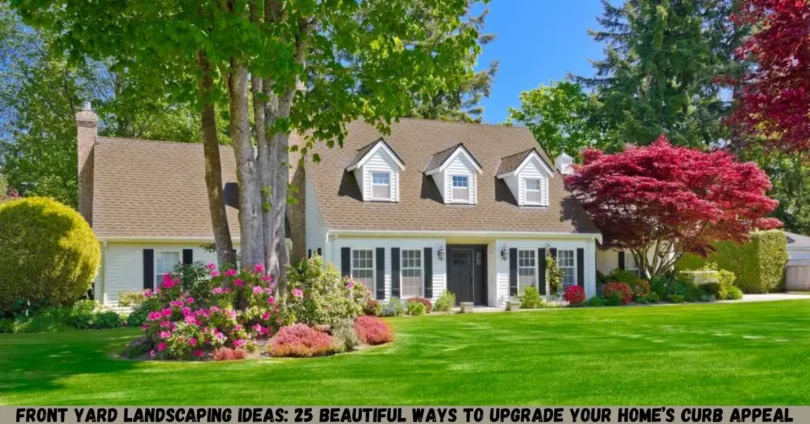
A simple combination such as defined pathway + layered planting + healthy lawn or ground cover + clean edging + entrance lighting can create a cohesive appearance.
The landscape should support the architecture rather than completely hide it.
Frequently Asked Questions
What are the best front yard landscaping ideas for a small yard?
For a small yard, focus on scale and simplicity. A narrow pathway, one appropriately sized tree, compact shrubs, layered flower beds, and a few planters can create visual interest without overcrowding the space. Vertical elements and repeated plant varieties can also add character while keeping the overall design organized.
How can I landscape my front yard on a budget?
Start with improvements that provide a noticeable visual difference, such as cleaning existing beds, adding mulch, defining edges, pruning overgrown plants, and introducing a limited number of attractive plants. You can complete the landscape in stages instead of paying for the entire project at once.
What plants are best for front yard landscaping?
There isn’t one universally best plant for every front yard. The right choices depend on your climate, sunlight, soil, drainage, available space, and maintenance preferences. Native and regionally adapted plants can be useful options because they are selected for local growing conditions, but suitability should still be checked for the specific site.
How do I make my front yard low maintenance?
Choose plants suited to your local conditions, group plants with similar water needs, reduce unnecessary lawn, use appropriate mulch, and avoid overcrowding. Selecting plants according to their mature size can also reduce future pruning. A low-maintenance landscape still requires regular seasonal care, but thoughtful planning can reduce the amount of work.
Should front yard landscaping be symmetrical?
Symmetry is optional. Formal homes and traditional landscapes may benefit from balanced or symmetrical planting, while natural or modern designs can use asymmetrical arrangements. What matters most is visual balance, appropriate scale, a clear entrance, and a consistent relationship between plants, pathways, hardscape, and the home.
Conclusion
The best front yard landscaping ideas combine attractive design with practical maintenance. You don’t need to completely rebuild your property to create a more welcoming outdoor space. A well-planned pathway, layered planting, suitable trees and shrubs, defined garden beds, thoughtful lighting, and regular maintenance can make a substantial difference.
Before starting, measure your yard, study sunlight and drainage, decide on a style, and select plants according to your local conditions and their mature size. If your budget is limited, work in stages and begin with the areas that have the greatest visual impact.