
Introduction
Eco friendly gardening tips can help you create a healthier garden while using fewer resources, producing less waste, and supporting local wildlife. Sustainable gardening does not mean giving up beautiful flowers, vegetables, lawns, or attractive landscaping. Instead, it means working with natural processes rather than relying heavily on water, synthetic fertilizers, pesticides, and disposable gardening products.
Simple changes can make a meaningful difference. Choosing plants suited to your local climate, improving soil with compost, using mulch, collecting rainwater, reducing chemical pesticide use, and creating habitat for pollinators are practical ways to make a garden more environmentally responsible.
This guide explains the most useful eco friendly gardening tips for beginners and experienced gardeners, including how to save water, build healthy soil, reduce garden waste, choose better plants, protect beneficial insects, and avoid common sustainable gardening mistakes.
What Is Eco Friendly Gardening?
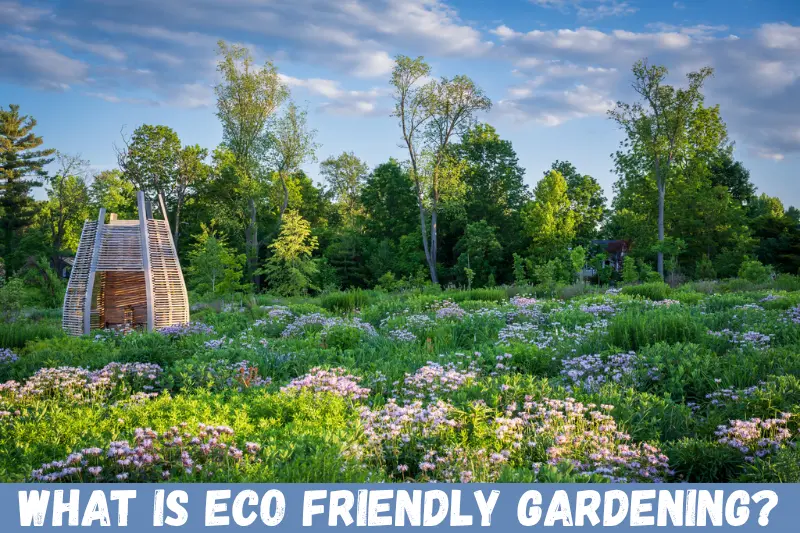
Eco friendly gardening is an approach to growing and maintaining plants while reducing unnecessary environmental impacts. It focuses on conserving water and soil, minimizing waste and chemical inputs, encouraging biodiversity, and choosing materials and plants appropriate for local conditions.
A sustainable garden generally works with nature instead of constantly trying to control it.
For example, rather than watering a garden frequently because the soil dries quickly, you can improve soil organic matter, apply suitable mulch, select plants adapted to the climate, and water deeply when necessary.
The goal is not to create a completely maintenance-free garden. The goal is to make thoughtful choices that use resources efficiently while keeping plants, soil, people, and wildlife healthy.
1. Choose Native and Climate-Appropriate Plants
One of the simplest eco friendly gardening tips is to choose plants that are naturally suited to your region.
Native and climate-appropriate plants can be better adapted to local temperatures, rainfall patterns, soils, and wildlife. Depending on the species and location, they may require less supplemental water and fewer interventions once established. The EPA recommends using native and regionally appropriate plants as part of water-smart landscaping.
Before purchasing plants, consider:
- Local climate and seasonal temperatures
- Average rainfall
- Soil type
- Amount of sunlight
- Available garden space
- Water requirements
- Mature plant size
- Potential invasiveness
Why Native Plants Matter
Native plants can provide food and habitat for insects, birds, and other wildlife that have evolved alongside local plant communities.
For a pollinator-friendly garden, consider a variety of flowering plants that bloom during different parts of the growing season. The EPA recommends incorporating native flowering plants suitable for the local climate and region to support pollinators.
However, “native” does not automatically mean “right for every garden.” Match the plant to the actual conditions of your yard rather than choosing a species simply because it is native.
2. Compost Your Kitchen and Garden Waste
Composting is one of the most practical ways to make a garden more sustainable.
Instead of sending suitable organic materials to the trash, you can turn items such as vegetable scraps, leaves, and many types of garden waste into compost. The EPA describes composting as a way to recycle organic materials into a valuable soil amendment.
Finished compost can improve soil structure, add organic matter, support soil organisms, and improve the soil’s ability to retain and infiltrate water.
What Can You Compost?
Depending on your composting system, suitable materials commonly include:
- Fruit and vegetable scraps
- Dry leaves
- Grass clippings
- Small amounts of untreated plant material
- Coffee grounds
- Plant-based kitchen waste
- Small amounts of suitable paper or cardboard
Avoid putting meat, dairy products, diseased plants, pet waste, or other unsuitable materials into a simple home compost system unless your specific composting method is designed to handle them.
How to Start Composting
- Select a suitable compost bin or designated area.
- Add a mixture of carbon-rich and nitrogen-rich organic materials.
- Keep the pile appropriately moist.
- Allow air to reach the material.
- Turn or mix the compost when appropriate.
- Wait until the material becomes dark, crumbly, and earthy-smelling.
Good compost takes time. Do not expect kitchen scraps to become finished compost immediately.
3. Use Mulch to Protect the Soil
Mulching is another easy way to make your garden more resource-efficient.
Mulch is a layer of material placed on top of soil. Organic options include leaves, compost, straw, wood chips, and other suitable plant-based materials.
Mulch can help reduce evaporation, suppress weeds, moderate soil temperature, and protect soil from erosion.
How to Use Mulch Correctly
Spread mulch evenly around plants while leaving appropriate space around stems and trunks. Excessively thick mulch can interfere with water movement and create other problems.
The EPA notes that around 3–4 inches is an appropriate general mulch depth for many landscape situations, while the exact amount should depend on the material and plants involved.
Good mulch choices can include:
- Shredded leaves
- Wood chips
- Straw
- Garden compost
- Grass clippings used appropriately
- Pine needles where suitable
Mulch should support your soil, not bury your plants.
4. Save Water by Watering More Efficiently
Water conservation is a major part of sustainable gardening.
One of the most common gardening mistakes is watering automatically without considering whether plants actually need water. Overwatering can waste resources and may create conditions that encourage plant problems.
The EPA recommends avoiding overwatering and using methods such as soaker hoses that deliver water closer to the soil. It also recommends watering deeply but less frequently when appropriate to encourage deeper root growth.
Practical Water-Saving Tips
- Water according to plant needs rather than a fixed routine.
- Check soil moisture before watering.
- Water near the root zone.
- Use mulch to reduce evaporation.
- Water during cooler parts of the day where practical.
- Group plants with similar water requirements together.
- Choose drought-tolerant plants suitable for your climate.
- Repair leaking hoses and irrigation equipment.
- Use drip or soaker irrigation where appropriate.
Your exact watering schedule should depend on climate, soil, season, plant type, and recent rainfall.
5. Collect Rainwater Where Appropriate
Rainwater harvesting can reduce your dependence on treated mains water for suitable garden uses.
A rain barrel or other appropriate collection system can capture water from a building’s roof and store it for later use. The EPA recommends rain barrels as one option for collecting and reusing rainwater.
Before installing a rainwater collection system, check local regulations and make sure the system is designed and maintained safely.
Rain Gardens Are Another Option
A rain garden is a planted area designed to receive and absorb stormwater.
Using appropriate plants and soil, a rain garden can help keep rainwater on the property instead of allowing all of it to run rapidly across hard surfaces.
This approach can be particularly useful where runoff and drainage are concerns.
6. Avoid Unnecessary Chemical Fertilizers
Plants need nutrients, but adding fertilizer without knowing what the soil or plants actually need can be wasteful.
The EPA recommends applying fertilizer only when necessary and at recommended amounts, while avoiding application close to waterways or immediately before windy or rainy conditions.
A better approach is to:
- Understand your soil.
- Identify what your plants actually require.
- Improve soil with appropriate organic matter.
- Use fertilizer only when justified.
- Follow the product label carefully.
Compost can contribute nutrients and improve soil properties, but it does not necessarily provide every nutrient required by every crop. Some plants may still need additional fertilization.
7. Create a Pollinator-Friendly Garden
Bees, butterflies, and other pollinating animals play important roles in ecosystems and food production.
You can make your garden more welcoming to pollinators by providing flowering plants, habitat, and suitable water sources.
The EPA recommends native flowering plants and reducing unnecessary disturbance to pollinator habitat.
Simple Pollinator Garden Ideas
Try to:
- Grow a variety of flowering plants.
- Choose plants suitable for your region.
- Include flowers from different seasons.
- Avoid unnecessary pesticide applications.
- Provide safe water sources.
- Leave some natural plant material where appropriate.
- Reduce excessive mowing.
- Avoid removing every fallen leaf or plant stem.
Recent USDA-supported research also highlights concerns about pollinator exposure to certain insecticides used in ornamental horticulture.
8. Use Natural Pest Management First
An eco friendly garden does not have to be a pest-free garden.
A small number of insects is normal, and many insects are beneficial. Before treating a pest problem, identify the insect and determine whether it is actually causing significant damage.
Integrated pest management focuses on prevention, monitoring, identification, and targeted intervention rather than automatically spraying pesticides.
Try These Approaches First
- Choose plants suited to the site.
- Keep plants healthy through proper watering and soil care.
- Remove badly affected plant material when appropriate.
- Encourage beneficial insects.
- Use physical barriers where practical.
- Hand-pick larger pests when feasible.
- Use pesticides only when necessary and according to the label.
Avoid assuming that every natural or homemade pesticide is automatically safe. “Natural” does not always mean harmless to people, pets, plants, or beneficial insects.
9. Reduce Lawn Size Where Practical
Traditional lawns can be useful for recreation, children, pets, and other activities, but a large lawn may require regular mowing, irrigation, and maintenance.
You do not necessarily need to remove your entire lawn. Instead, consider whether every part of the lawn has a practical purpose.
Unused areas can sometimes be converted into:
- Native planting beds
- Vegetable gardens
- Shrub borders
- Pollinator gardens
- Groundcovers
- Shade gardens
- Rain gardens
If you keep a lawn, choose grass appropriate for your climate and use it where it serves a real function. The EPA recommends placing turf strategically and selecting lower-water-use turfgrass suited to local conditions where appropriate.
10. Reuse Garden Materials
Sustainable gardening also means thinking about what you buy and throw away.
Before purchasing new garden containers, supports, edging, or decorations, see whether something you already own can be reused.
For example:
- Reuse suitable containers as plant pots.
- Use fallen branches as natural garden edging where appropriate.
- Reuse clean containers for seed starting.
- Repair garden tools instead of replacing them immediately.
- Share infrequently used equipment with neighbors.
- Choose durable products rather than disposable ones.
The EPA identifies salvaged and recycled-content materials as considerations when selecting greener landscaping products.
11. Choose Energy-Efficient Garden Equipment
Garden equipment can also affect the environmental footprint of your yard.
For small gardens, manual tools can sometimes replace powered equipment entirely. For larger properties, consider efficient equipment appropriate to the job.
Possible options include:
- Hand pruners
- Manual shears
- Push reel mowers
- Electric equipment
- Rechargeable battery tools
- Solar-powered lighting
EPA guidance on greener landscaping includes low- or zero-emission equipment among sustainability considerations.
The most sustainable tool is often the one that lasts a long time, is maintained properly, and is used only when necessary.
12. Improve Soil Health Naturally
Healthy soil is the foundation of a productive garden.
Instead of treating soil as an inert growing medium, think of it as a living ecosystem containing organic matter, microorganisms, roots, air, and water.
Adding appropriate compost and organic matter can improve soil structure and water retention.
Good Soil-Building Practices
- Add mature compost when appropriate.
- Keep soil covered with plants or mulch.
- Avoid unnecessary soil disturbance.
- Prevent soil compaction.
- Grow plants suited to the existing soil.
- Use organic matter according to your soil’s needs.
- Avoid excessive fertilizer.
Healthy soil can make many other sustainable gardening practices easier because plants are better supported by their growing environment.
13. Plant a Vegetable Garden Sustainably
Growing vegetables at home can be a rewarding part of an eco friendly garden, particularly when you grow crops that your household will actually use.
Start small rather than creating a large garden that produces more work and waste than you can manage.
Sustainable Vegetable Gardening Tips
- Grow vegetables suited to your climate and season.
- Start with a manageable number of crops.
- Use compost to improve soil where appropriate.
- Mulch around suitable crops.
- Collect rainwater where permitted and safe.
- Save seeds when appropriate for the variety.
- Avoid unnecessary pesticides.
- Harvest regularly to reduce food waste.
Planning matters. Growing a crop successfully but allowing much of it to spoil is less resource-efficient than growing a smaller amount that you will actually eat.
14. Avoid Invasive Plants
A plant can look attractive and still create environmental problems if it spreads aggressively outside cultivation.
Before buying an unfamiliar plant, check whether it is considered invasive in your region.
This is especially important when purchasing plants online or from sellers outside your local area.
The EPA recommends considering native, climate-appropriate plants and being cautious about exotic species that may become invasive.
Common Eco Friendly Gardening Mistakes to Avoid
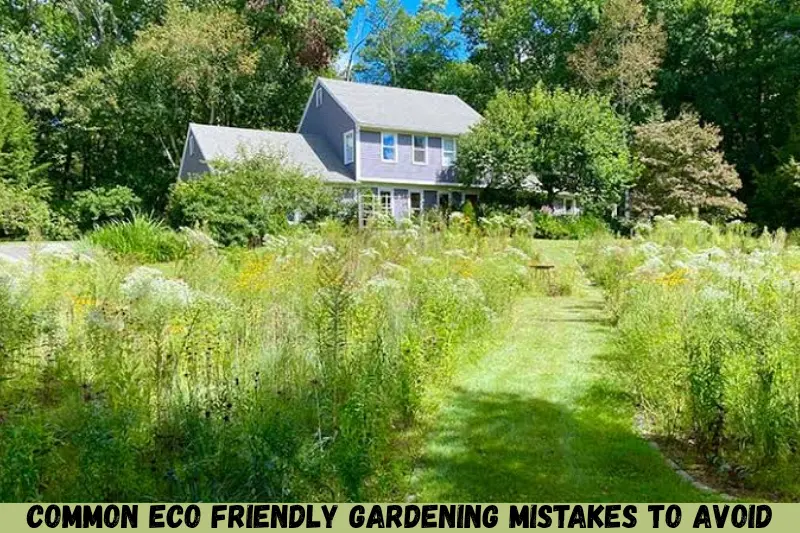
Even gardeners with good intentions can make choices that work against sustainability.
Overwatering
More water does not automatically mean healthier plants. Excessive watering can waste water and may create unfavorable soil conditions.
Using Too Much Mulch
A thick layer of mulch is not always better. Excess mulch can restrict water movement and create problems around plant bases.
Assuming Every Natural Product Is Safe
Natural pesticides and fertilizers can still affect plants, insects, animals, and waterways.
Planting Without Considering Mature Size
A small plant at the nursery may eventually become much larger. Planting too closely can create unnecessary pruning, removal, and replacement.
Choosing Plants Only for Appearance
A beautiful plant that struggles in your soil and climate may require more water, fertilizer, pest control, and maintenance.
Removing Every Leaf and Plant Stem
A perfectly tidy garden is not always the most wildlife-friendly garden. Some natural material can provide habitat and shelter for beneficial organisms.
Eco Friendly Gardening: Quick Comparison
| Gardening Choice | More Sustainable Approach | Why It Helps |
|---|---|---|
| Watering | Water according to plant and soil needs | Reduces unnecessary water use |
| Fertilizing | Test or assess needs and avoid excess | Reduces nutrient waste and runoff |
| Soil care | Compost and appropriate organic matter | Improves soil structure and water retention |
| Weed control | Mulch and prevention first | Reduces unnecessary chemical use |
| Pest control | Identify and monitor pests first | Protects beneficial organisms |
| Plant selection | Native and climate-appropriate plants | Can reduce maintenance and resource needs |
| Garden waste | Compost suitable organic material | Keeps useful material in circulation |
| Landscaping | Permeable and natural materials where suitable | Helps manage water movement |
A Simple Eco Friendly Garden Plan
If you are starting from scratch, you do not need to change everything at once.
Step 1: Observe Your Garden
Record sunny, shaded, dry, wet, windy, and heavily used areas.
Step 2: Improve the Soil
Use appropriate compost or organic matter and avoid unnecessary disturbance.
Step 3: Choose the Right Plants
Select plants according to local climate, sunlight, soil, water availability, and mature size.
Step 4: Add Mulch
Cover suitable bare soil with an appropriate mulch layer while keeping plant stems clear.
Step 5: Improve Watering
Water according to actual plant needs and use efficient irrigation methods where appropriate.
Step 6: Create Wildlife Habitat
Add flowering plants, shelter, and water sources that are appropriate for local wildlife.
Step 7: Reduce Chemicals
Use prevention, monitoring, and non-chemical methods before considering pesticide treatments.
Step 8: Compost Garden Waste
Turn suitable organic materials into a useful soil amendment rather than automatically throwing them away.
Step 9: Review and Improve
Observe what works each season and adjust your plant choices, watering, soil care, and maintenance routine.
Frequently Asked Questions
What are the best eco friendly gardening tips for beginners?
Start with a few practical changes: choose plants suited to your local climate, compost suitable organic waste, mulch bare soil, water efficiently, and avoid unnecessary pesticides and fertilizers. You do not need to redesign the entire garden at once. Improving soil and selecting appropriate plants can make future maintenance easier.
How can I make my garden more environmentally friendly?
Focus on reducing resource use and supporting natural processes. Use compost, conserve water, choose appropriate plants, reduce unnecessary lawn areas, provide habitat for pollinators, reuse garden materials, and use pesticides only when genuinely necessary. A sustainable garden is created through many small decisions rather than one single product or technique.
Is compost good for an eco friendly garden?
Yes, properly produced compost can be a useful soil amendment. It adds organic matter and can improve soil structure, water retention, nutrient management, and biological activity. Composting also diverts suitable organic materials from disposal. However, compost is not a complete replacement for every fertilizer in every gardening situation.
How can I save water in my garden?
Choose plants suited to your climate, check soil moisture before watering, apply mulch, water near plant roots, and avoid unnecessary irrigation. Rainwater collection can also provide an alternative water source where permitted and appropriate. Water requirements vary considerably by plant, soil, weather, and season, so avoid following a rigid schedule without checking actual conditions.
Are native plants always better for sustainable gardening?
Native plants can provide important ecological benefits and are often well adapted to local conditions, but the right plant still depends on your specific site. Consider sunlight, soil, moisture, space, and local climate. A suitable non-native plant that is not invasive can sometimes perform well, while an inappropriate native plant may struggle in the wrong location.
Conclusion
Eco friendly gardening tips are mostly about making smarter choices with the resources already available to you. Composting organic waste, improving soil health, using mulch, conserving water, choosing suitable plants, protecting pollinators, reducing unnecessary chemicals, and reusing materials can all contribute to a healthier and more sustainable garden.
You do not have to make every change immediately. Start with one practical improvement, such as creating a compost system, replacing a water-hungry plant with a suitable climate-adapted option, or adding mulch to exposed soil. Once that habit becomes part of your gardening routine, build from there.
A greener garden is not necessarily a perfect garden. It is a garden designed to work more effectively with its local environment while providing useful space for plants, people, and wildlife.