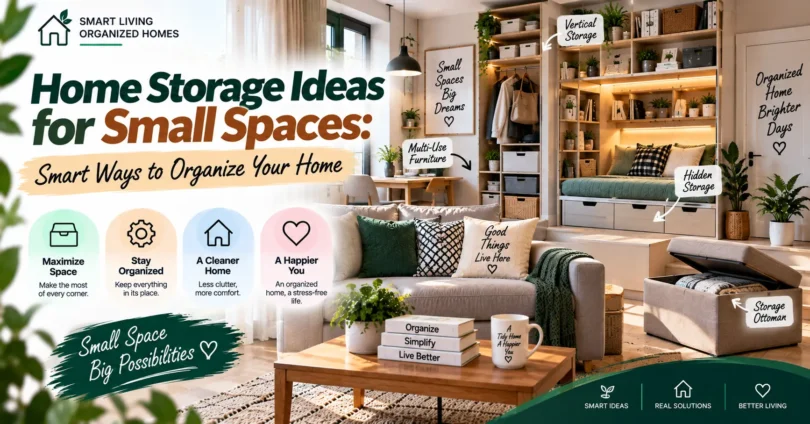

Home storage ideas for small spaces can help you create a cleaner, more functional home without needing extra rooms or expensive renovations. The key is to use overlooked areas, vertical surfaces, multifunctional furniture, and smart organizers so that everyday items have a practical place.
For Indian homes, where apartments, compact flats, and shared family spaces often need to serve multiple purposes, thoughtful storage can make a noticeable difference. A small bedroom may double as a study area, a living room may need space for guests, and a compact kitchen may have to accommodate cookware, groceries, and appliances.
This guide explains practical storage solutions for bedrooms, kitchens, living rooms, bathrooms, entryways, and other compact areas. You will also learn how to choose suitable storage, avoid common organization mistakes, and make better use of the space you already have.
What Are the Best Home Storage Ideas for Small Spaces?
The best storage solutions for a small home use existing space efficiently instead of filling rooms with additional cabinets and furniture. Vertical shelving, under-bed storage, wall-mounted units, door organizers, baskets, hooks, and furniture with hidden compartments are particularly useful.
A successful storage plan should make frequently used items easy to reach while keeping less-used belongings out of the way. It should also leave enough open space for comfortable movement.
Some practical options include:
- Floor-to-ceiling shelves
- Storage beds and ottomans
- Wall-mounted cabinets
- Under-sink organizers
- Stackable containers
- Hooks behind doors
- Floating shelves
- Drawer dividers
- Storage baskets and bins
- Foldable or multifunctional furniture
The right combination depends on the room, the items you need to store, and how frequently you use them.
Use Vertical Space Instead of More Floor Space
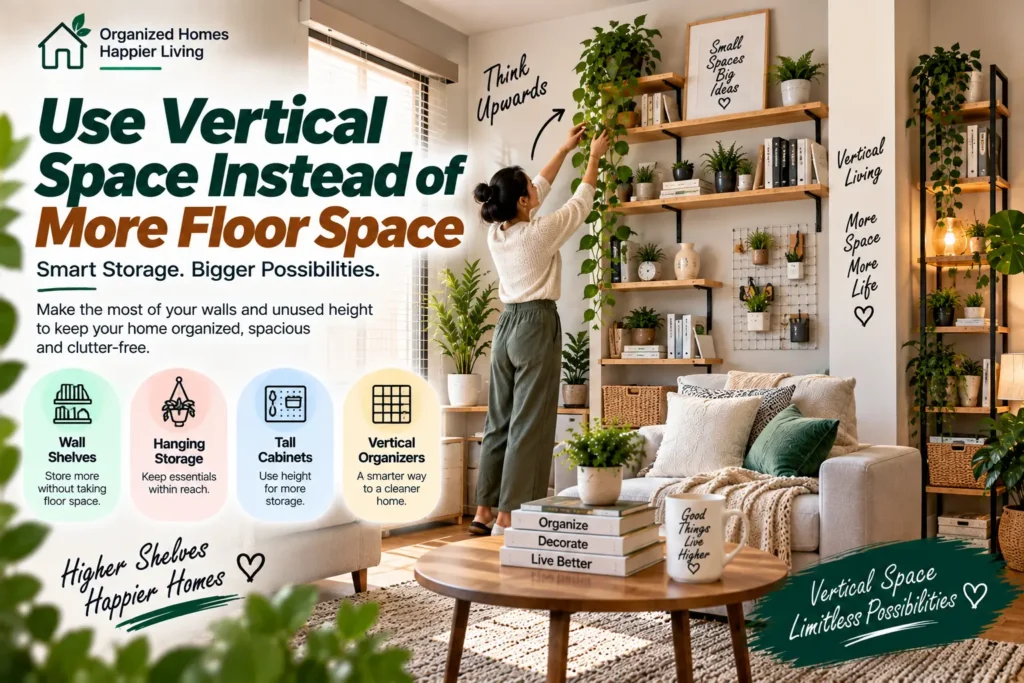
Vertical storage is one of the most effective ways to organize a compact home because walls often remain underused. Tall shelving and wall-mounted storage can increase usable capacity without reducing walking space.
Install Tall Shelving Units
Choose tall, narrow shelving instead of short, wide cabinets when floor area is limited. Shelves extending toward the ceiling can hold books, storage boxes, decorative objects, documents, and items that are not required every day.
Keep frequently used belongings between waist and eye level. Seasonal or rarely used items can go on higher shelves.
Avoid overcrowding open shelving. Leaving some visual space between objects helps a small room feel lighter and more organized.
Add Floating Shelves
Floating shelves work particularly well above desks, sofas, kitchen counters, toilets, and other areas where a traditional cabinet might feel bulky.
In a bedroom, they can hold books and small accessories. In a kitchen, they can provide space for jars, cups, or frequently used ingredients.
Make sure shelves and their fixings are suitable for the wall type and expected load. Heavy objects require appropriately rated hardware and secure installation.
Choose Furniture With Built-In Storage
Multifunctional furniture allows one item to perform two or more jobs. This is especially valuable when a room has limited floor space.
A bed with drawers, for example, provides sleeping space and storage without requiring a separate chest of drawers. Similarly, an ottoman can offer seating while hiding blankets, books, or other household items.
Useful options include:
- Beds with built-in drawers
- Hydraulic storage beds
- Storage ottomans
- Benches with hidden compartments
- Coffee tables with shelves or drawers
- Sofas with storage sections
- Desks with integrated shelving
Before purchasing multifunctional furniture, measure the available space carefully. Remember to account for doors, drawers, walking paths, and the clearance needed to open storage compartments comfortably.
Make Better Use of Under-Bed Storage
The area underneath a bed is valuable storage space that is often overlooked. It is particularly useful for belongings that are needed occasionally rather than every day.
Low-profile storage boxes can hold spare bedding, blankets, seasonal clothing, shoes, travel accessories, or bags. Containers with lids can also help protect stored items from everyday dust.
Transparent boxes make contents easy to identify. If opaque boxes suit your décor better, simple labels can save time when looking for something later.
Avoid turning the area into an uncontrolled collection of miscellaneous items. Group similar belongings together and periodically remove anything you no longer need.
Small Kitchen Storage Ideas That Save Space
A small kitchen becomes easier to use when storage follows the cooking workflow. Everyday utensils and ingredients should be accessible, while rarely used cookware can be stored higher or farther away.
Organize Kitchen Cabinets Vertically
Kitchen cabinets often contain unused vertical space between shelves. Shelf risers, stackable organizers, and suitable racks can create additional levels for plates, cups, containers, or pantry goods.
Group similar items together. Keeping spices in one area, breakfast ingredients in another, and baking supplies together reduces unnecessary searching.
Drawer dividers can also prevent cutlery and small cooking tools from becoming mixed together.
Use Cabinet Doors Carefully
The inside of suitable cabinet doors can provide additional storage for lightweight objects. Small racks or organizers may hold cleaning cloths, foil, wraps, or other compact supplies.
Always check that an organizer does not interfere with shelves or prevent the cabinet from closing correctly.
Use Matching or Stackable Containers
Stackable containers can make pantry shelves more efficient because they use vertical space more effectively than irregular packaging.
Choose food-safe containers appropriate for the contents, and label them clearly when the original packaging is removed. Keeping expiry information where necessary can also make pantry management easier.
Living Room Storage Ideas for Small Homes
Living-room storage should control clutter without making the room look crowded. Closed storage is helpful for visually busy items, while a limited amount of open shelving can display books and décor.
A TV console with drawers can store cables, remote controls, chargers, games, and other accessories. A storage ottoman can hold blankets or cushions while also serving as extra seating or a footrest.
Wall-mounted cabinets are another useful option because they keep the floor visually open. For a balanced appearance, combine practical closed storage with a few carefully selected display areas rather than filling every wall.
Bedroom Storage Ideas for Limited Space
Bedroom storage works best when clothing, accessories, bedding, and personal items each have a designated location.
Start with the wardrobe. Use shelves, drawers, hanging sections, and small organizers according to the type of clothing you own rather than relying on one large open compartment.
Use the Back of the Door
An over-door or securely mounted organizer can provide space for lightweight accessories and everyday items. Depending on the design, it may hold scarves, small bags, caps, or similar belongings.
Hooks can also work well, but avoid adding excessive weight to doors.
Improve Wardrobe Organization
Use matching hangers where practical to reduce wasted rail space. Drawer dividers are useful for smaller clothing items and accessories.
Seasonal clothing can be moved to upper shelves or suitable storage containers when it is not in regular use. This keeps the most accessible areas available for clothes you actually wear.
Smart Bathroom Storage Ideas
Bathrooms often have limited floor area, so wall space and narrow gaps become particularly important.
Wall-mounted cabinets can store toiletries and personal-care products without occupying additional floor space. Shelving above the toilet may also provide useful storage where the room layout allows it.
Small baskets can group similar products together, making cabinets easier to maintain. Under-sink organizers may help make use of otherwise awkward space around plumbing.
Because bathrooms are humid environments, choose storage materials suitable for moisture and ventilation. Avoid keeping items in damp areas if their packaging or instructions require dry storage.
Use Corners and Awkward Spaces
Corners, narrow gaps, and recessed areas can provide useful storage when standard furniture does not fit.
A corner shelf can work in a bathroom, kitchen, bedroom, or living room. Narrow rolling units may fit beside suitable cabinets or appliances, provided they do not obstruct ventilation, doors, utilities, or safe access.
Custom storage can be worthwhile for unusually shaped spaces, but it is not always necessary. Before ordering built-in cabinetry, check whether modular shelves, adjustable racks, or simple baskets can solve the problem at a lower cost.
Create Storage Around the Entryway
A well-organized entrance can prevent shoes, bags, keys, and everyday accessories from spreading through the rest of the home.
A slim shoe cabinet is often more space-efficient than a wide rack. Wall hooks can provide designated spots for reusable bags, umbrellas, or other lightweight everyday items.
A small tray or drawer for keys and frequently carried essentials can also make leaving the house easier.
For very compact entrances, prioritize only items used regularly. Seasonal or rarely used footwear can be stored elsewhere.
Use Storage Boxes, Baskets, and Labels
Containers are most useful when they create clear categories rather than simply hiding clutter.
Use separate baskets or boxes for groups such as children’s supplies, cables, cleaning accessories, stationery, documents, or seasonal items. Labels make closed storage easier for everyone in the household to understand.
However, buying containers should not be the first step in organizing. Declutter first, decide what needs to remain, measure the available space, and then choose containers that fit.
Otherwise, you may simply end up storing unnecessary belongings more neatly.
Open Storage vs Closed Storage: Which Is Better?
Both can work in small homes, but they solve different problems.
| Storage Type | Best For | Main Benefit | Limitation |
|---|---|---|---|
| Open shelves | Books, décor, everyday items | Easy access | Can look cluttered |
| Closed cabinets | Household supplies and mixed items | Cleaner appearance | Contents are less visible |
| Baskets | Toys, accessories, loose items | Flexible and easy to move | Need labels for easy identification |
| Drawers | Clothing and small belongings | Organized and accessible | Require opening clearance |
| Wall storage | Compact rooms | Saves floor space | Requires secure installation |
A combination is usually more practical than relying on only one type. Use closed storage for visually busy belongings and open storage for frequently used or decorative items.
How to Organize a Small Home Step by Step
A good storage system begins with reducing unnecessary belongings, not purchasing more organizers.
Follow these steps:
- Work on one room at a time. Trying to reorganize the entire home at once can make the task unnecessarily difficult.
- Sort belongings by category. Group clothes, documents, kitchen supplies, books, toys, and other items.
- Remove what you no longer need. Donate, recycle, sell, or responsibly dispose of suitable unwanted items.
- Identify unused space. Check walls, corners, areas under furniture, cabinet interiors, and suitable spaces behind doors.
- Measure before buying storage. Record width, depth, and height so shelves and containers fit correctly.
- Keep frequently used items accessible. Everyday belongings should not require moving several boxes.
- Label closed containers. Clear labels make the system easier to maintain.
- Review the setup after a few weeks. If an item repeatedly ends up outside its assigned place, its storage location may be inconvenient.
The goal is not to fit the maximum possible number of belongings into the home. It is to make the available space easier to use.
Affordable Home Storage Ideas for Indian Homes
Effective storage does not necessarily require expensive modular furniture. Many improvements can be made by reorganizing existing cabinets and using simple accessories.
Affordable options include stackable baskets, hooks, drawer dividers, shelf risers, storage boxes, and basic wall shelves. Reusing sturdy containers you already own can also work when they are clean, safe, and suitable for the intended purpose.
For rented homes, consider solutions that require minimal permanent alteration. Freestanding racks, tension-based organizers where appropriate, baskets, and removable systems can provide flexibility. Always follow manufacturer instructions and avoid hanging heavy items from fixtures not designed to support them.
Common Small-Space Storage Mistakes to Avoid
One of the biggest mistakes is adding more storage before reducing clutter. More cabinets cannot solve the problem effectively if they are immediately filled with belongings you rarely use.
Another mistake is using every available surface. Filling walls, shelves, doors, and corners can make a compact room feel visually crowded even when everything is technically organized.
Also avoid:
- Buying organizers before measuring
- Blocking walking paths
- Storing everyday items in difficult-to-reach places
- Making storage systems too complicated
- Overloading shelves or hooks
- Ignoring moisture and ventilation
- Keeping items simply because storage space exists
- Using unlabeled boxes for unrelated belongings
Simple storage systems are usually easier to maintain over time.
How to Make a Small Home Look Less Cluttered
To make a small home appear more organized, reduce the number of visible loose items and keep frequently used surfaces reasonably clear.
Choose a few consistent storage styles rather than many unrelated baskets and containers. Closed cabinets can hide visually busy household supplies, while selected open shelves can add personality without overwhelming the room.
Maintaining some empty space is important too. Not every shelf, corner, or wall needs to be filled.
Regular short decluttering sessions can prevent unused items from gradually taking over available storage.
Frequently Asked Questions
What are the most effective home storage ideas for small spaces?
The most effective options use areas that do not interfere with everyday movement. Vertical shelves, under-bed boxes, wall-mounted cabinets, storage beds, hooks, drawer organizers, and multifunctional furniture can all work well. Start by decluttering and measuring your available space before purchasing new storage products.
How can I create more storage in a small bedroom?
Use the area beneath the bed, improve the internal layout of your wardrobe, and consider wall-mounted shelves where appropriate. Storage beds can be especially useful in compact bedrooms. Keep everyday clothing within easy reach and move seasonal belongings to higher shelves or less accessible storage areas.
How can I organize a small Indian kitchen?
Group similar ingredients and utensils, use stackable containers, add shelf risers where useful, and organize drawers with dividers. Keep frequently used cooking essentials near the main preparation area. Less-used cookware can go on higher shelves, while suitable cabinet doors and under-sink areas can provide additional storage.
Is open or closed storage better for small spaces?
Neither is universally better. Closed cabinets create a calmer appearance by hiding visually busy items, while open shelves provide quick access and can display attractive belongings. Many small homes benefit from combining both: closed storage for household supplies and open storage for selected everyday or decorative items.
How can I add storage without making a room feel smaller?
Use vertical and hidden storage instead of adding bulky furniture. Wall-mounted units, floating shelves, under-bed boxes, tall narrow cabinets, and multifunctional furniture preserve more usable floor area. Avoid filling every wall and corner; some open space helps a compact room remain comfortable and visually balanced.
Conclusion
The best home storage ideas for small spaces are not about squeezing more belongings into every available corner. Good storage makes your home easier to use by giving necessary items logical places while keeping floors, surfaces, and walking areas comfortable.
Start with one room, remove what you no longer need, and identify overlooked areas such as walls, under-bed space, cabinet interiors, corners, and suitable door space. Then introduce storage solutions based on what you actually own.
For a practical first step, choose the room that currently feels most cluttered and reorganize one category today. A simple, maintainable system will usually provide better long-term results than filling your home with additional organizers.