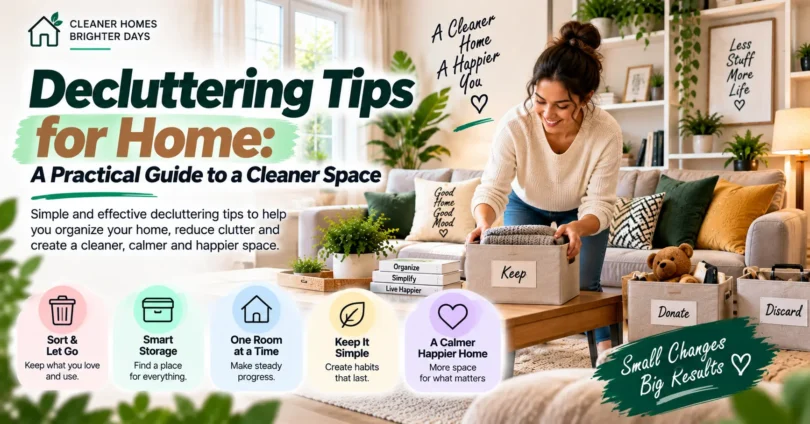

Decluttering tips for home can make everyday living simpler, more organized, and easier to manage. Whether you live in a compact apartment, an independent house, or a shared family home, removing unnecessary items can free up valuable space and make rooms easier to clean and use.
Decluttering does not mean throwing away everything you own or trying to create a perfectly minimal home. It is about deciding what deserves space in your home, finding practical places for useful belongings, and removing items that no longer serve a purpose.
For Indian households, this can be particularly useful because storage areas often contain seasonal clothing, old utensils, paperwork, festival decorations, school materials, containers, and items saved for possible future use. A practical room-by-room approach helps you deal with these belongings without turning decluttering into an exhausting project.
What Does Decluttering Your Home Mean?
Decluttering means identifying belongings that are unnecessary, unused, duplicated, damaged, or stored in the wrong place and deciding what to do with them.
The goal is not simply to make a room look empty. Effective decluttering improves how the space functions. Frequently used items should be easy to access, similar belongings should stay together, and things that are no longer useful should not occupy valuable storage space.
For example, a kitchen drawer filled with broken tools, duplicate spoons, takeaway packets, and rarely used accessories may make it difficult to find the utensil you actually need. Removing unnecessary objects immediately makes that storage space more functional.
Decluttering is therefore the first step toward better home organization. Organizing clutter without deciding what you actually need often results in neatly arranged clutter rather than a genuinely organized home.
Why Is Decluttering Important for a Home?
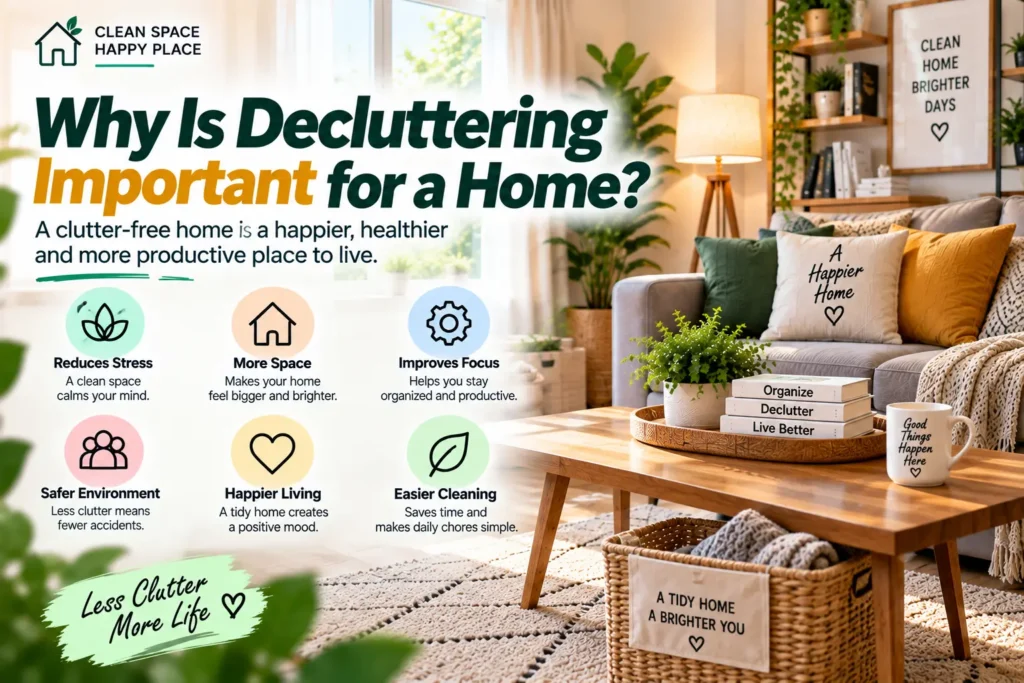
Decluttering makes rooms easier to use, clean, and maintain. When surfaces, cabinets, and storage spaces contain fewer unnecessary objects, routine household tasks usually become simpler.
It can also help you understand what you already own. Items hidden at the back of overcrowded cupboards are easily forgotten, which can lead to unnecessary repeat purchases.
Practical benefits of regular decluttering include:
- More usable storage space
- Easier everyday cleaning
- Faster access to frequently used belongings
- Fewer duplicate purchases
- Better use of wardrobes, cabinets, drawers, and shelves
- Easier preparation when moving or renovating
- A more open and orderly appearance
The biggest advantage is functionality. A home does not need to look like a showroom; it needs to work well for the people living there.
How to Start Decluttering Without Feeling Overwhelmed
The easiest way to begin is to choose one small, clearly defined area instead of attempting the entire house at once.
Start with a single drawer, bedside table, kitchen shelf, bathroom cabinet, or section of your wardrobe. Completing a small area gives you a visible result and makes the next task easier to approach.
Set a Clear Decluttering Goal
Before starting, decide exactly what you want to accomplish. Instead of saying, “I need to organize my house,” choose something specific such as, “I will clear the kitchen counter and organize one cabinet.”
A clear goal prevents one task from expanding into several unfinished projects.
You can also use a short time limit. A focused 15- or 20-minute session can be more manageable than trying to spend an entire day decluttering.
Use Four Simple Categories
As you sort belongings, separate them into four categories:
- Keep: Useful items that you regularly need or genuinely value.
- Donate or give away: Usable belongings that someone else can benefit from.
- Recycle or discard: Broken, expired, unsafe, or unusable items.
- Relocate: Useful belongings that belong somewhere else in the home.
Avoid creating a large “decide later” pile. It often becomes another form of clutter.
Declutter One Room at a Time
One of the most effective decluttering tips for home is to work room by room. This keeps the project manageable and allows you to finish one area before creating disorder elsewhere.
Living Room
Begin with visible surfaces such as the coffee table, TV unit, side tables, and open shelves. Remove old newspapers, packaging, unnecessary decorative pieces, cables, toys, and items that belong in another room.
Next, examine closed storage. Entertainment cabinets and drawers often accumulate old remote controls, chargers, manuals, batteries, and electronic accessories.
Keep commonly used objects accessible and give them a defined location. For example, remotes can stay in a small tray or drawer rather than moving around the room.
Bedroom
Bedrooms commonly collect clothing, shopping bags, paperwork, cosmetics, accessories, and objects placed temporarily on chairs or bedside tables.
Start with visible clutter before tackling the wardrobe. Clear surfaces and return misplaced items to their correct locations.
Then sort clothing according to what fits, what you actually wear, and what suits your current lifestyle. Clothes in usable condition that you no longer need can be donated or passed on rather than occupying wardrobe space indefinitely.
Kitchen
Kitchen decluttering can produce some of the most noticeable improvements because storage space is valuable and used every day.
Check cabinets and drawers for duplicate utensils, damaged containers, lids without matching boxes, expired packaged foods, old takeaway items, and appliances that are rarely used.
Keep everyday cookware and ingredients within easy reach. Less frequently used equipment can occupy higher shelves or deeper storage areas.
Avoid buying organizers before decluttering. You may discover that you need fewer baskets and containers once unnecessary items have been removed.
Bathroom
Bathroom storage should prioritize hygiene, accessibility, and safety.
Check toiletries, grooming products, cosmetics, cleaning supplies, and medicines stored in bathroom cabinets. Dispose of expired or unusable products appropriately and avoid keeping empty bottles simply because they might be useful later.
Group similar products together so that you can quickly see what is available before purchasing replacements.
Entryway
The entrance of a home can become cluttered quickly because shoes, bags, helmets, umbrellas, keys, parcels, and other everyday belongings often collect there.
Create dedicated storage for the items your household regularly uses when leaving or entering the home. A shoe rack, key holder, small tray, hooks, or compact cabinet may be enough.
Keeping the entrance organized also prevents clutter from spreading into nearby rooms.
Decluttering Tips for Small Indian Homes and Apartments
Small homes require careful use of available space, but adding more storage is not always the answer. First reduce the number of unnecessary possessions, then organize what remains.
Use vertical storage where appropriate. Wall-mounted shelves, hooks, tall cabinets, and over-door organizers can provide storage without consuming much floor area.
Under-bed storage can work well for seasonal bedding, extra blankets, or clothing that is not needed regularly. However, it should remain organized rather than becoming a hidden dumping area.
Furniture with built-in storage can also be useful in compact homes. Beds, benches, ottomans, and tables with storage compartments allow one piece of furniture to perform multiple functions.
The key principle is simple: storage should support belongings you need rather than provide unlimited space for things you do not use.
How to Declutter Your Wardrobe Effectively
A practical wardrobe should make it easy to see, select, and return clothing.
Take one category at a time instead of emptying the entire wardrobe. You might begin with shirts, then trousers, traditional wear, winter clothing, shoes, and accessories.
For each item, consider three questions:
- Do I wear or use this?
- Does it fit my current needs?
- Would I choose to keep it if storage space were limited?
Keep clothing based on actual use rather than imagined future situations. Special-occasion outfits and sentimental garments can have a place, but they should be intentionally selected.
Seasonal rotation can also help. In warmer months, heavy winter clothing can be cleaned and stored separately, leaving everyday wardrobe space available for frequently used clothes.
Deal With Paper Clutter Before It Builds Up
Bills, receipts, school papers, warranties, instruction manuals, bank documents, medical records, and other paperwork can quickly occupy drawers and shelves.
Create separate categories for documents that need action, records that must be retained, and papers that can be discarded safely.
Important documents should have a clearly designated storage location. Where appropriate, digital copies can provide convenient backup and reduce the need to retain unnecessary paper copies.
However, do not discard original documents that may be required for legal, financial, educational, property, identity, or administrative purposes.
Be Careful With Sentimental Items
Sentimental belongings are usually harder to declutter than everyday household objects, so leave them until you have gained experience making easier decisions.
You do not have to remove an item simply because it has no practical function. Memories, family history, and emotional value are valid reasons to keep selected belongings.
The problem arises when every old object is treated as equally important.
Choose the pieces that carry the strongest meaning. A small, carefully selected collection of photographs, letters, gifts, or family objects is easier to protect and appreciate than several boxes that are rarely opened.
Create a Home for Everything You Keep
Decluttering works best when every frequently used item has a logical storage location.
Store belongings close to where they are used. Keep cooking utensils near food-preparation areas, cleaning supplies where they can be accessed safely, and everyday accessories near the place where you get ready.
Group similar objects together. This makes it easier to find what you need and immediately shows when you already have enough of something.
Labels can be useful inside pantry containers, document folders, storage boxes, and shared family cupboards, especially when several people use the same storage areas.
Use the One-In, One-Out Approach
Once your home is decluttered, controlling what enters the house becomes important.
A simple approach is to consider removing an older equivalent when you buy a replacement. For example, when purchasing a new pair of shoes because an older pair is worn out, decide whether the old pair still needs to remain in your wardrobe.
This does not need to become a strict rule for every purchase. Instead, use it as a reminder to consider available space before adding more possessions.
Avoid Buying Storage Products Too Early
Buying baskets, boxes, drawer dividers, and storage containers can feel like progress, but storage products do not remove clutter.
Declutter first and organize second.
Once you know exactly what you are keeping, you can measure the available space and choose organizers that fit your actual needs. This approach can save money and prevent unused storage products from becoming clutter themselves.
Transparent containers may work well for items you need to identify quickly, while labelled opaque boxes can be useful for less frequently accessed belongings.
Common Decluttering Mistakes to Avoid
A successful decluttering process is less about speed and more about making sustainable decisions.
One common mistake is trying to declutter the whole home in a single day. This can create several messy rooms at once and make the task harder to finish.
Another mistake is moving clutter between rooms. An object has not been dealt with simply because it has been moved from the bedroom to a spare cupboard.
Be especially careful about these habits:
- Keeping broken objects without a realistic repair plan
- Saving excessive packaging and shopping bags
- Buying organizers before reducing clutter
- Creating large “maybe” piles
- Keeping unnecessary duplicates
- Filling every empty shelf immediately
- Starting several rooms without finishing one
- Holding onto unwanted gifts purely from obligation
Decluttering decisions should reflect your household’s genuine needs rather than a rigid minimalist standard.
How to Keep Your Home Clutter-Free
The easiest way to maintain an organized home is to deal with small amounts of clutter regularly.
Spend a few minutes each evening returning frequently used items to their assigned places. Clear dining tables, kitchen counters, sofas, and other surfaces before miscellaneous belongings accumulate.
A weekly reset can cover slightly larger tasks, such as sorting paperwork, checking the refrigerator, returning misplaced clothing, and clearing the entryway.
Before buying something new, ask where it will be stored and whether you already own something that serves the same purpose. This simple pause can prevent unnecessary possessions from entering your home.
A Simple 7-Day Home Decluttering Plan
If you want a structured starting point, spread the work across one week instead of trying to finish everything immediately.
| Day | Area | Main Task |
|---|---|---|
| Day 1 | Living room | Clear surfaces, shelves, cables and misplaced items |
| Day 2 | Kitchen | Check food, containers, utensils and cabinets |
| Day 3 | Bedroom | Clear surfaces and sort everyday belongings |
| Day 4 | Wardrobe | Review clothes, shoes and accessories |
| Day 5 | Bathroom | Sort toiletries, cosmetics and storage |
| Day 6 | Paperwork | Organize documents, bills and receipts |
| Day 7 | Storage areas | Review boxes, seasonal items and remaining clutter |
You can adjust this schedule according to your home’s size. A larger household may need several days for a single category, while someone living in a small apartment may finish more quickly.
Frequently Asked Questions
What is the easiest way to start decluttering a home?
Start with one small area that can be completed quickly, such as a drawer, bedside table, kitchen shelf, or bathroom cabinet. Separate items into keep, donate, discard, and relocate categories. Finishing one small space creates a visible improvement without producing the overwhelming mess that can result from emptying an entire room at once.
How often should I declutter my home?
There is no fixed schedule that works for every household. Small weekly resets can prevent everyday clutter from accumulating, while wardrobes, kitchens, paperwork, and storage areas may benefit from a more thorough review every few months. The best schedule is one you can maintain consistently without turning decluttering into a stressful project.
What should I throw away when decluttering?
Prioritize objects that are broken beyond reasonable repair, expired products, unusable packaging, unnecessary duplicates, and items that have no realistic purpose. Usable belongings do not necessarily need to go into the rubbish. Depending on their condition, they may be donated, given to friends or family, sold, reused, or recycled appropriately.
How can I declutter when I am emotionally attached to things?
Begin with practical items rather than sentimental belongings. Once you become comfortable making simple decisions, review emotional possessions individually. Keep the objects that genuinely represent important memories instead of automatically keeping everything associated with the past. You can also photograph selected items before letting them go if the memory matters more than the physical object.
How can I stop clutter from coming back?
Give every frequently used item a permanent place and return it after use. Review incoming purchases, paperwork, packaging, and household items regularly instead of allowing them to accumulate. Before buying something, consider whether you need it, whether you already own an alternative, and exactly where the new item will be stored.
Conclusion
Using practical decluttering tips for home does not require extreme minimalism or an expensive organization system. The most effective approach is to start small, remove what no longer serves your household, organize the things you genuinely use, and create simple routines that prevent clutter from returning.
Choose one drawer, shelf, or surface today and complete it before moving to another area. Small, consistent improvements can gradually create a home that feels more spacious, functional, easier to clean, and simpler to maintain.