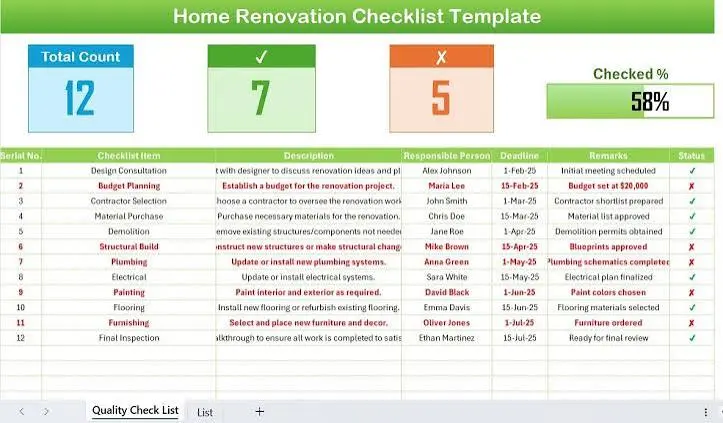

Introduction
Home renovation checklist planning can make the difference between a smooth remodeling project and an expensive, stressful experience. Whether you are updating a kitchen, remodeling a bathroom, finishing a basement, or renovating an entire house, the right preparation helps you control costs, organize contractors, and avoid preventable delays.
This complete home renovation checklist is designed for homeowners in the United States. It covers everything from defining your renovation goals and setting a realistic budget to hiring contractors, checking permits, selecting materials, managing construction, and completing the final walkthrough.
A renovation does not have to feel overwhelming. Breaking the project into clear stages gives you a practical roadmap and helps you make better decisions before work begins.
What Is a Home Renovation Checklist?
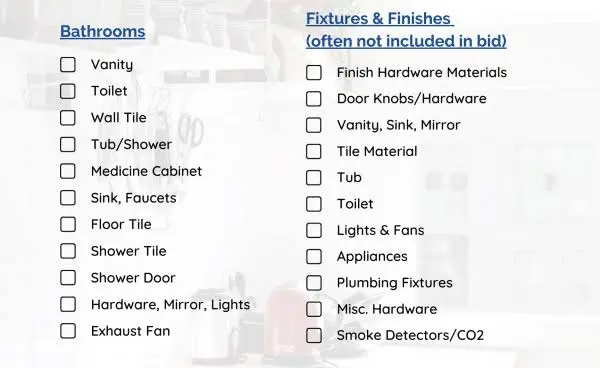
A home renovation checklist is a step-by-step planning guide that organizes the major tasks involved in remodeling or improving a home.
It typically covers:
- Renovation goals and priorities
- Project scope
- Budget and contingency funds
- Design and material selection
- Contractor research
- Permits and inspections
- Construction preparation
- Safety and temporary living arrangements
- Quality checks
- Final inspection and cleanup
The exact checklist will vary depending on the size and location of the project. A cosmetic room refresh may require relatively little planning, while structural changes, electrical work, plumbing changes, additions, or major remodeling can involve professionals, permits, inspections, and more extensive coordination.
Why Do You Need a Home Renovation Checklist?
The main benefit of a renovation checklist is organization. Remodeling involves many decisions that have to happen in the correct order.
For example, you generally should not finalize cabinet installation before confirming measurements, plumbing locations, electrical requirements, and appliance specifications.
A home renovation checklist helps you plan every step of your renovation project properly. With a detailed home renovation checklist, you can organize your budget, materials, and work schedule easily. A useful home renovation checklist also helps you avoid missing important tasks during the renovation. Before starting, review your home renovation checklist to make sure everything is ready. Keeping a complete home renovation checklist makes the entire home improvement process more organized and stress-free.
A detailed checklist helps you:
- Establish realistic priorities
- Identify potential problems early
- Track decisions and purchases
- Coordinate contractors and suppliers
- Prepare for required permits
- Reduce last-minute changes
- Monitor the project budget
- Keep important documents together
- Check completed work before final payment
It also gives you a central reference point when several trades are involved.Main mehnat karta hoon ya apna waqt behtar banata hoon.Aap SEO seekhein ya digital marketing, mehnat zaroori hai.Aap guest posting karein ya link building, quality important hai.Client se baat karein ya project complete karein, professionalism rakhein.Aap Pakistan mein kaam karein ya abroad, success ke liye consistency chahiye.
Home Renovation Checklist: Before You Start
Before hiring anyone or ordering materials, define exactly what you want to accomplish.
A home renovation checklist helps you plan every step of your renovation project properly. With a detailed home renovation checklist, you can organize your budget, materials, and work schedule easily. A useful home renovation checklist also helps you avoid missing important tasks during the renovation. Before starting, review your home renovation checklist to make sure everything is ready. Keeping a complete home renovation checklist makes the entire home improvement process more organized and stress-free.
1. Define Your Renovation Goals
Start by answering one basic question:
Why are you renovating your home?
Your answer could be related to comfort, functionality, maintenance, appearance, accessibility, resale preparation, or a combination of these.
Write down your top priorities and separate them into three categories:
Must-have improvements
These are essential changes that should be completed even if the project has to be simplified.
Nice-to-have improvements
These would improve the project but could be postponed if the budget becomes tight.
Future improvements
These are ideas that can be completed during a later phase.
This simple exercise prevents you from treating every idea as equally important.
2. Inspect the Existing Home
Before creating a detailed design, understand the condition of the property.
Depending on the project, you may need to evaluate:
- Roof condition
- Foundation and structural components
- Plumbing
- Electrical systems
- HVAC equipment
- Windows and doors
- Insulation
- Flooring
- Walls and ceilings
- Moisture or water damage
- Drainage around the property
For major renovations, consider getting appropriate professional inspections before construction begins. Discovering a serious issue after walls have been opened can significantly affect both the budget and schedule.
3. Create a Realistic Renovation Budget
Your renovation budget should include more than the price quoted.
Consider:
- Design or architectural services
- Contractor labor
- Materials
- Appliances
- Fixtures
- Permit fees
- Inspection fees
- Delivery charges
- Waste disposal
- Temporary accommodation, if necessary
- Unexpected repairs
- Final cleaning
Keep a contingency amount for unforeseen work. The appropriate amount depends on the age and condition of the home, the complexity of the project, and how much of the existing structure will be disturbed.
The important principle is simple: do not spend your entire available budget on the initial construction estimate.
4. Decide What You Can DIY
Not every renovation task requires a contractor.
Homeowners may be comfortable handling tasks such as:
A home renovation checklist helps you plan every step of your renovation project properly. With a detailed home renovation checklist, you can organize your budget, materials, and work schedule easily. A useful home renovation checklist also helps you avoid missing important tasks during the renovation. Before starting, review your home renovation checklist to make sure everything is ready. Keeping a complete home renovation checklist makes the entire home improvement process more organized and stress-free.
- Painting
- Basic demolition where appropriate
- Furniture removal
- Simple decorating
- Hardware replacement
- Some non-technical finishing work
However, electrical, plumbing, structural, gas, roofing, or other specialized work may require qualified professionals and may be subject to local requirements.
If you are uncertain whether a task is appropriate for DIY work, check local regulations and consult a qualified professional.
5. Build Your Renovation Design
Once your goals and budget are clear, develop the design.
For a kitchen renovation, for example, your planning may include:
- Cabinet layout
- Countertop dimensions
- Appliance locations
- Lighting
- Electrical outlets
- Plumbing
- Flooring
- Backsplash
- Storage
For a bathroom, consider:
- Shower or bathtub
- Vanity
- Toilet placement
- Ventilation
- Lighting
- Plumbing
- Waterproofing
- Flooring
- Storage
The more detailed the plan is before construction begins, the fewer decisions you have to make under pressure during the renovation.
6. Research Materials and Products
Select materials before they are needed on-site whenever possible.
Create a record containing:
| Item | Brand/Model | Quantity | Cost | Supplier | Ordered |
|---|---|---|---|---|---|
| Flooring | Selected product | ___ | $___ | ___ | Yes/No |
| Cabinets | Selected style | ___ | $___ | ___ | Yes/No |
| Lighting | Selected fixtures | ___ | $___ | ___ | Yes/No |
| Faucets | Selected model | ___ | $___ | ___ | Yes/No |
| Paint | Selected color | ___ | $___ | ___ | Yes/No |
This prevents forgotten purchases and makes it easier to track the project budget.
7. Check Local Permits and Building Requirements
Permit requirements vary by location and project type.
Before construction begins, contact your local building department to determine whether permits or inspections are required for your renovation.
This is particularly important when the project involves:
- Structural changes
- Electrical work
- Plumbing
- HVAC modifications
- Additions
- Changes to exterior walls
- Major alterations to a property
Do not assume that a contractor will automatically handle every permit requirement. Confirm responsibilities in writing.
8. Research and Hire the Right Contractor
Choosing a contractor is one of the most important steps in the entire renovation process.
Look for contractors who are appropriate for your project and verify relevant credentials, insurance, references, and licensing requirements applicable in your location.
When comparing contractors, ask:
- How long have you been doing this type of work?
- Have you completed similar projects?
- Who will actually perform the work?
- Will subcontractors be used?
- What is included in the estimate?
- How are change orders handled?
- What is the expected timeline?
- What payment schedule do you use?
- What warranty or workmanship terms apply?
Do not choose a contractor based solely on the lowest price.
A very low estimate can sometimes indicate that important work, materials, or project requirements were left out.
9. Get a Detailed Written Contract
Before work begins, make sure the agreement clearly explains the project.
The contract should address, as applicable:
- Scope of work
- Materials
- Labor
- Project price
- Payment schedule
- Estimated start and completion dates
- Change-order procedures
- Cleanup responsibilities
- Warranty terms
- Permit responsibilities
- Subcontractors
- Insurance requirements
Avoid relying on verbal promises for important project decisions.
Keep copies of contracts, receipts, estimates, invoices, permits, product information, and correspondence in one organized location.
10. Prepare Your Home for Construction
Construction can create dust, noise, debris, and restricted access.
Before demolition begins:
- Remove valuable or fragile items.
- Protect furniture that remains in the house.
- Cover areas that need protection from dust.
- Establish a safe route through the home.
- Decide where tools and materials will be stored.
- Arrange temporary kitchen or bathroom facilities if necessary.
- Keep children and pets away from active construction areas.
- Confirm how construction waste will be removed.
If you are renovating a kitchen or bathroom, plan how your household will manage without that space.
11. Follow the Correct Renovation Sequence
A typical major renovation may follow this general order:
- Planning and design
- Budget confirmation
- Contractor selection
- Permits and approvals
- Material ordering
- Site preparation
- Demolition
- Structural work
- Plumbing and electrical rough-ins
- HVAC work
- Insulation and drywall
- Flooring and major surfaces
- Cabinets and built-ins
- Fixtures and appliances
- Painting and finishing
- Final inspections
- Punch-list corrections
- Cleaning
- Final walkthrough
The exact sequence varies by project. Your contractor should provide a project-specific schedule.
12. Track Your Budget During Construction
Do not wait until the renovation is finished to calculate your spending.
Maintain a running budget that includes:
- Original contract amount
- Approved change orders
- Material purchases
- Permit costs
- Additional labor
- Delivery charges
- Unexpected repairs
- Remaining balance
What Is a Change Order?
A change order is a documented modification to the original scope of work, price, materials, or schedule.
For example, if a wall is opened and previously hidden damage is discovered, correcting that problem may require additional work. The change should be documented before proceeding whenever practical.
A written change-order process helps prevent disagreements about what was approved and how much it costs.
13. Monitor the Quality of Work
You do not need to supervise every action a contractor takes, but you should stay informed.
Regularly check:
- Work is following the agreed scope.
- Materials match the selected products.
- Changes are documented.
- Work areas remain reasonably safe.
- Required inspections are completed.
- Problems are reported promptly.
Take photos throughout the project. Photographs can create a useful record of work that will later be hidden behind drywall, flooring, cabinets, or other finishes.
14. Complete the Final Inspection
Before considering the renovation complete, conduct a detailed walkthrough.
Create a punch list containing anything that still needs attention.
Check:
- Doors open and close correctly.
- Cabinets and drawers operate properly.
- Faucets and plumbing fixtures work.
- Drains function correctly.
- Lights and switches operate as expected.
- Appliances are installed correctly.
- Flooring and tile are properly finished.
- Paint and trim are complete.
- Windows and hardware work correctly.
- Construction debris has been removed.
- Required inspections have been completed.
Do not rush the final walkthrough.
Common Home Renovation Mistakes to Avoid
Underestimating the Budget
A renovation budget should account for both planned work and reasonable unexpected costs.
Changing the Design Too Often
Frequent changes can increase costs, cause delays, and create coordination problems.
Choosing the Cheapest Contractor
Price matters, but qualifications, communication, scope, insurance, references, and workmanship matter too.
Ordering Materials Too Late
A missing fixture, appliance, cabinet, or specialty material can delay other trades.
Ignoring Permits
Failing to understand local permit requirements can create complications later, particularly when work is inspected, sold, refinanced, or modified.
Paying Without Documentation
Keep invoices, receipts, contracts, and change orders. Written records help everyone understand what was agreed upon.
Forgetting About Daily Life
A renovation affects how you use your home. Plan for cooking, bathing, sleeping, working, storage, pets, children, and access before construction begins.
How to Make Your Home Renovation More Efficient
A successful renovation is not simply about spending more money. It is about making decisions early and coordinating them carefully.
Use these practical strategies:
- Finalize major design decisions before construction.
- Keep one central renovation folder.
- Track every approved change.
- Order long-lead materials early.
- Communicate with contractors regularly.
- Avoid unnecessary mid-project changes.
- Photograph concealed work before it is covered.
- Keep receipts and product information.
- Confirm measurements before ordering custom items.
- Review invoices against the agreed scope.
- Maintain a realistic contingency budget.
Home Renovation Checklist: Quick Printable Version
Use this condensed version as a practical project checklist:
Planning
- Define renovation goals
- Identify must-have improvements
- Inspect existing conditions
- Establish a realistic budget
- Set priorities
- Decide what can be DIY
- Develop the design
Before Construction
- Research contractors
- Verify applicable credentials and insurance
- Obtain detailed estimates
- Sign a written contract
- Confirm permit requirements
- Finalize materials
- Order important products
- Establish a construction schedule
- Prepare the home
During Construction
- Monitor progress
- Track expenses
- Document changes
- Photograph concealed work
- Confirm inspections
- Communicate problems promptly
- Keep work areas safe
Completion
- Complete final walkthrough
- Create a punch list
- Confirm corrections
- Complete required inspections
- Collect warranties and manuals
- Keep final invoices and receipts
- Clean the renovated area
- Confirm the project is complete
For better professional communication, learn these email etiquette rules for professionals and use practical email productivity tips. You can also improve your workflow with Gmail.
Frequently Asked Questions
What should I do first when renovating my home?
Start by defining your goals, identifying the areas you want to renovate, and assessing the existing condition of the property. Then establish a realistic budget and determine which improvements are essential. For larger projects, consider professional design, inspection, and contractor advice before committing to construction.
How much should I budget for unexpected renovation costs?
There is no single contingency amount that works for every renovation. Older homes, structural projects, and renovations that involve opening walls can carry more uncertainty. Instead of treating your entire budget as available for planned work, reserve a reasonable contingency based on your property’s condition and project complexity.
Do I always need a permit for home renovations?
No. Permit requirements depend on the type of work and local rules. Cosmetic improvements may not require the same approvals as structural, electrical, plumbing, mechanical, or addition projects. Contact your local building department before construction to understand which permits and inspections apply to your specific renovation.
How do I choose a reliable renovation contractor?
Compare contractors based on relevant experience, references, applicable licensing and insurance, communication, project scope, and written pricing—not simply the lowest bid. Ask how changes are documented and paid for. A detailed written contract should clearly establish responsibilities, materials, payment terms, and the expected project schedule.
What should I keep after a home renovation?
Keep contracts, invoices, receipts, permits, inspection records, warranties, appliance manuals, product information, paint colors, and photographs of important concealed work. These records can help with future maintenance and repairs and may also be useful if you sell or refinance the property later.
Conclusion
A home renovation checklist gives you a structured way to move from an idea to a completed project. The most important steps are defining your goals, evaluating your home’s condition, establishing a realistic budget, planning the design, understanding local requirements, choosing qualified contractors, documenting changes, and inspecting the finished work.
For U.S. homeowners, renovation requirements can vary considerably by state, county, and municipality, so local building and permitting rules should always be confirmed before work begins.A home renovation checklist helps you plan every step of your renovation project properly. With a detailed home renovation checklist, you can organize your budget, materials, and work schedule easily. A useful home renovation checklist also helps you avoid missing important tasks during the renovation. Before starting, review your home renovation checklist to make sure everything is ready. Keeping a complete home renovation checklist makes the entire home improvement process more organized and stress-free.