
Introduction
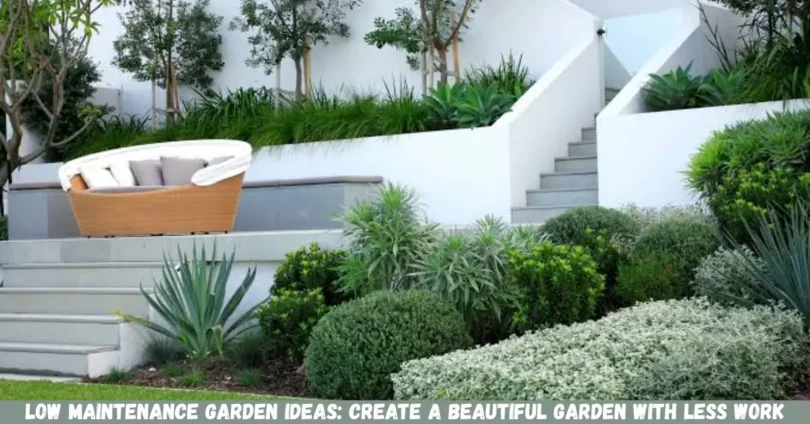
Low maintenance garden ideas can help you create an attractive outdoor space without spending every weekend watering, weeding, mowing, and pruning. The goal is not to create a garden that requires absolutely no work—every garden needs some care—but to design one where routine maintenance is simpler and less frequent.
The best approach is to choose plants suited to your local growing conditions, reduce unnecessary lawn areas, cover exposed soil with appropriate mulch or ground cover, and use a garden layout that makes routine tasks easier. The Royal Horticultural Society (RHS) similarly notes that no garden is completely maintenance-free, but thoughtful design can reduce the amount of work required.
Whether you have a small backyard, a large garden, a rental property, or a compact outdoor area, these practical ideas can help you build a space that looks good while demanding less ongoing attention.
What Is a Low Maintenance Garden?
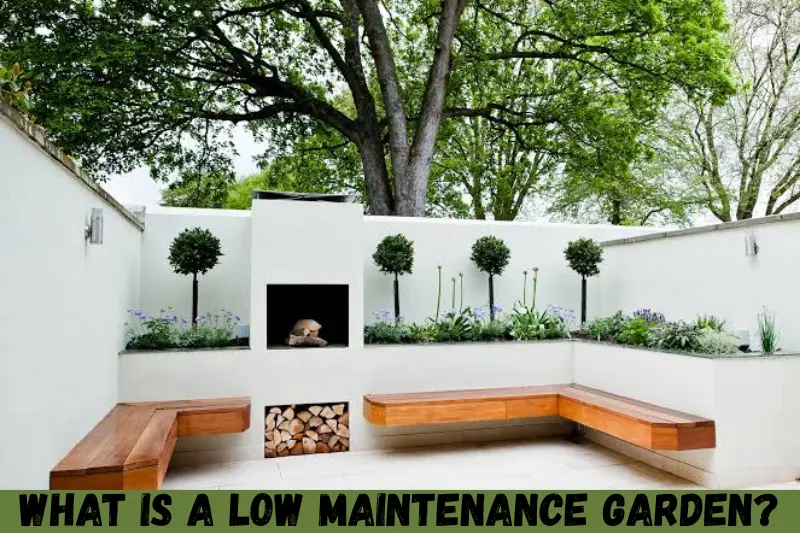
A low maintenance garden is an outdoor space designed to reduce regular gardening tasks such as mowing, watering, pruning, digging, fertilizing, and weeding.
Instead of relying on plants that require constant attention, low maintenance gardening focuses on:
- Plants that suit the available sunlight and soil
- Drought-tolerant or water-efficient planting where appropriate
- Mulching to suppress weeds and reduce moisture loss
- Ground-cover plants
- Smaller or simpler lawn areas
- Durable landscaping materials
- Efficient garden layouts
- Plants that naturally maintain an attractive shape
The important point is to work with your garden conditions rather than against them. A plant that naturally suits your soil and light conditions is generally easier to maintain than one that needs constant correction.
12 Low Maintenance Garden Ideas That Actually Work
1. Choose Easy-Care Plants
One of the simplest low maintenance garden ideas is to start with the right plants.
Rather than choosing plants purely because they look attractive at the garden centre, consider whether they are suited to your soil, sunlight, rainfall, temperature, and available space.
Look for plants that:
- Suit your local climate
- Have manageable growth habits
- Do not require frequent pruning
- Tolerate the conditions in your garden
- Have reasonable water requirements once established
- Provide interest for a long period
The RHS recommends assessing factors such as shade, soil type, exposure, and local microclimates before selecting drought-tolerant plants.
This simple planning step can prevent a common problem: buying plants that look great initially but require excessive watering, feeding, protection, or pruning.
2. Reduce the Amount of Lawn
A large lawn can become one of the most time-consuming parts of a garden.
Regular mowing, edging, watering, feeding, and repairing damaged areas can quickly turn lawn care into a major chore.
You do not necessarily have to remove your entire lawn. Instead, consider reducing it and replacing some areas with:
- Planting beds
- Ground covers
- Gravel
- Paving
- Patio areas
- Trees and shrubs
- Outdoor seating
- Mulched borders
Keeping a smaller, useful lawn can give you the visual benefits of grass without making it the dominant feature of the garden.
For dry conditions, the RHS also identifies lawn alternatives such as clover, thyme, and wildflowers as options that can reduce watering requirements while supporting garden biodiversity.
3. Use Mulch to Reduce Weeding
Mulching is one of the most useful techniques for a low maintenance garden.
A layer of suitable mulch covers exposed soil, helping suppress weeds while reducing moisture loss. Organic mulches can also contribute organic matter as they break down.
Suitable options can include:
- Well-rotted garden compost
- Composted bark
- Wood-based mulch
- Leaf mould
- Gravel or grit for suitable planting styles
The RHS recommends applying mulch over moist soil and notes that mulch can help retain moisture and suppress weeds. Its guidance generally describes mulch layers of at least 5 cm, with around 7.5 cm often recommended depending on the material and situation.
Avoid piling mulch directly against tree trunks or shrub stems because excessive contact can create problems.
4. Create a Gravel Garden
Gravel can be an excellent choice when you want an attractive garden with relatively simple upkeep.
A gravel garden can combine:
- Drought-tolerant plants
- Ornamental grasses
- Shrubs
- Stones
- Pavers
- Decorative rocks
This style works particularly well for sunny areas where plants suited to dry conditions can thrive.
However, gravel is not automatically maintenance-free. Weeds can still appear, especially if the gravel becomes mixed with underlying soil. Proper preparation and suitable plant selection make a significant difference.
5. Plant Ground Covers
Ground-cover plants can fill spaces between larger plants and reduce the amount of exposed soil.
This can make a garden look fuller while helping reduce opportunities for weeds to establish.
Depending on your climate and conditions, possible ground-cover choices may include suitable varieties of:
- Thyme
- Nepeta
- Sedum
- Creeping plants
- Low-growing ornamental grasses
Plant selection should always be based on local growing conditions rather than simply choosing a plant because it is described as low maintenance.
The RHS notes that ground cover can help reduce moisture loss and suppress weeds in appropriate planting situations.
6. Group Plants According to Their Needs
Instead of scattering plants with different water and sunlight requirements throughout the garden, group plants with similar needs together.
For example, you could create:
Dry sunny zone:
Use plants that tolerate full sun and lower moisture.
Part-shade zone:
Choose plants that prefer filtered light or partial shade.
Moist area:
Use plants that naturally tolerate higher soil moisture.
This approach makes watering and general maintenance more efficient because you are not constantly trying to meet completely different requirements in every part of the garden.
7. Choose Drought-Tolerant Plants Where Appropriate
Drought-tolerant gardening can reduce watering after plants are properly established, particularly in suitable climates and soils.
However, “drought tolerant” does not mean “never needs water.”
Newly planted trees, shrubs, and perennials often need regular watering while their root systems establish. The RHS specifically recommends watering newly planted plants during establishment even when they are considered drought tolerant.
Some drought-tolerant plants have characteristics such as:
- Silver or grey-green foliage
- Thick or fleshy leaves
- Small leaves
- Waxy foliage
- Deep or extensive root systems
Plant suitability still depends on the individual species and your local conditions.
8. Install an Easy-to-Maintain Patio or Seating Area
A practical seating area can reduce the amount of space that needs regular gardening.
A patio, terrace, or simple outdoor seating zone can provide a useful destination in the garden while reducing the need to fill every square metre with plants.
Choose durable surfaces that are appropriate for your climate and easy to clean.
You can soften hard landscaping with:
- Large containers
- Raised planters
- A few shrubs
- Decorative pots
- Climbing plants
- Outdoor furniture
The result can be a garden that feels finished without requiring dozens of individual planting areas.
9. Use Containers Strategically
Container gardening is useful when you want colour or greenery without creating extensive planting beds.
Instead of filling your garden with many small pots, consider using a few larger containers.
Large containers can:
- Create visual focal points
- Hold several compatible plants
- Be easier to manage than many tiny pots
- Add colour near patios and entrances
- Help define different outdoor areas
Choose containers with appropriate drainage and plants suited to the amount of sunlight available.
Remember that containers can dry out faster than garden soil, so they may actually require more frequent watering than established plants in the ground. For that reason, container gardening should be used strategically rather than assuming every pot is automatically low maintenance.
10. Consider No-Dig Gardening
No-dig gardening can reduce the amount of physical effort involved in preparing and maintaining beds.
Instead of repeatedly turning the soil, gardeners can use organic matter and mulch on the soil surface. The RHS describes no-dig gardening as a method that minimizes soil disturbance while using organic matter to support soil health.
A simple approach is:
- Remove large weeds.
- Cover particularly troublesome areas where appropriate.
- Add suitable organic matter.
- Apply a generous layer of mulch.
- Plant through the mulch.
- Remove new weeds while they are still small.
- Add more organic matter as needed over time.
No-dig does not mean “never do any maintenance.” It is simply a way of reducing unnecessary digging and cultivation.
11. Choose Shrubs With Manageable Growth
Shrubs can provide structure and greenery without requiring the repeated seasonal work associated with some high-maintenance plants.
When choosing shrubs, check their mature height and spread before planting.
A common mistake is selecting a shrub because it is small when purchased without considering its eventual size.
Look for plants that:
- Fit the available space
- Have naturally attractive shapes
- Do not require constant clipping
- Suit your soil and sunlight
- Offer useful seasonal interest
Correct placement is just as important as plant selection.
A plant that naturally fits the space will generally require less corrective pruning.
12. Make Garden Paths Simple and Practical
A well-planned path can make the entire garden easier to maintain.
Instead of creating complicated curves, numerous tiny beds, and difficult-to-reach corners, use straightforward pathways that allow you to easily access plants and garden equipment.
Practical materials may include:
- Paving
- Gravel
- Brick
- Stone
- Concrete
- Other locally suitable hard landscaping materials
Good access means you can reach plants for watering, pruning, inspection, and occasional maintenance without walking through planting beds.
Best Plants for a Low Maintenance Garden
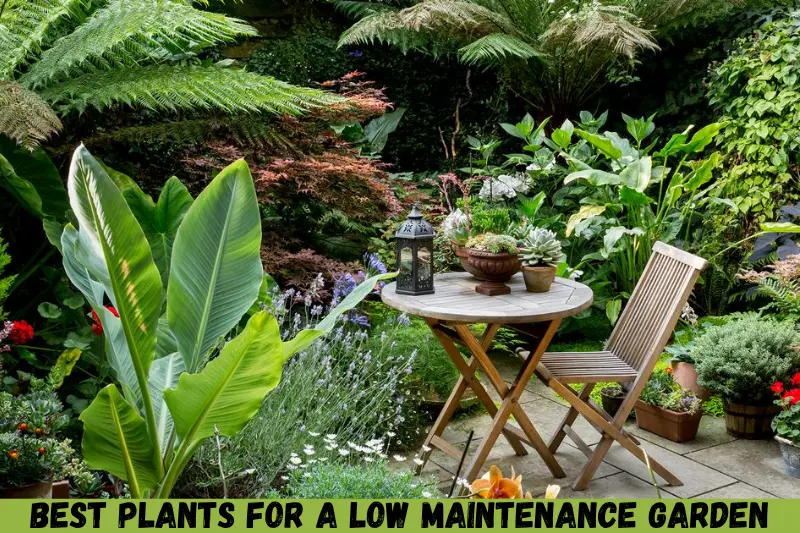
There is no single list of “best” plants for every garden because climate, soil, rainfall, sunlight, and winter temperatures vary.
Some plant groups are commonly useful for easier-care gardens when the individual species are appropriate for the location.
Drought-Tolerant Perennials
Depending on local conditions, drought-tolerant perennial choices can include plants such as:
- Sedum
- Nepeta
- Some salvias
- Lavender
- Ornamental grasses
Many plants adapted to dry conditions have foliage characteristics that help them cope with water stress.
Ground-Cover Plants
Ground covers can help fill bare spaces and reduce exposed soil.
Possible choices include:
- Creeping thyme
- Suitable sedums
- Low-growing nepeta
- Other locally adapted ground covers
Always check whether a particular plant is suitable for your climate before planting it.
Shrubs
Shrubs can provide permanent structure and may require less seasonal attention than some annual bedding schemes.
Examples to investigate for your area include:
- Abelia
- Certain evergreen shrubs
- Suitable native shrubs
- Drought-tolerant shrubs
Plant size at maturity should always be considered.
How to Design a Low Maintenance Garden Step by Step
If you are starting from scratch, avoid buying plants before creating a basic plan.
Step 1: Assess Your Garden
Record:
- Sunny areas
- Shady areas
- Wind exposure
- Soil type
- Drainage
- Existing trees
- Existing lawn
- Water availability
The RHS recommends considering shade, soil, and microclimates when selecting plants for dry conditions.
Step 2: Identify Your Biggest Maintenance Problem
Ask yourself what takes the most time.
Is it:
- Mowing?
- Weeding?
- Watering?
- Pruning?
- Digging?
- Cleaning?
- Maintaining containers?
Then design around that problem.
For example, if watering takes too much time, prioritize suitable plants, improve soil where appropriate, use mulch, and reconsider thirsty planting schemes.
Step 3: Reduce High-Maintenance Features
You do not need to remove everything.
Instead, gradually reduce features that require excessive work.
A large lawn could become smaller.
Too many containers could become a few larger ones.
Constantly clipped hedges could be replaced with naturally shaped planting.
Step 4: Create Simple Planting Zones
Group plants with similar needs together.
This makes maintenance more predictable and helps prevent overwatering or underwatering.
Step 5: Cover Bare Soil
Use suitable mulch or ground-cover plants.
Bare soil can become a constant source of weeds, so covering it is an important part of a lower-maintenance strategy.
Step 6: Give Plants Enough Space
Do not plant everything too closely together simply because the garden looks empty.
Plants grow.
Allowing enough room for mature growth can reduce future pruning and overcrowding problems.
Low Maintenance Garden Ideas for Small Spaces
Small gardens can actually be easier to manage when they are designed carefully.
Try these approaches:
- Use one simple planting theme.
- Choose a limited number of plant varieties.
- Use large containers instead of many small pots.
- Reduce unnecessary lawn.
- Add a compact seating area.
- Use vertical planting selectively.
- Cover exposed soil with mulch.
- Choose plants based on mature size.
- Keep paths clear and practical.
A small garden does not need dozens of different plants to look interesting. Repeating a few compatible plants can create a more cohesive appearance while simplifying maintenance.
Low Maintenance Garden Ideas for Busy Homeowners
If you have limited time, focus on eliminating repetitive jobs rather than simply working faster.
For example:
Problem: Too much watering
Solution: Choose plants suited to your conditions and improve moisture retention with appropriate soil preparation and mulch.
Problem: Constant weeding
Solution: Reduce bare soil and use appropriate mulch or ground cover.
Problem: Too much mowing
Solution: Reduce lawn area or investigate suitable lawn alternatives.
Problem: Excessive pruning
Solution: Choose plants with naturally manageable mature sizes and shapes.
Problem: Too many individual pots
Solution: Consolidate plants into fewer, larger containers where appropriate.
The objective is to redesign the workload rather than simply adding more gardening tasks to your schedule.
How to Reduce Garden Watering
Efficient watering is an important part of low maintenance gardening.
Watering plants deeply and appropriately can encourage stronger root development, while frequent shallow watering can create a less efficient routine. The RHS advises watering thoroughly and allowing the soil surface to dry before watering again where appropriate.
You can also reduce watering demands by:
- Choosing suitable plants
- Improving soil where necessary
- Applying mulch
- Grouping plants according to water needs
- Watering at appropriate times
- Checking soil moisture before watering
- Using efficient irrigation where practical
Avoid assuming that every plant needs the same watering schedule.
Common Low Maintenance Gardening Mistakes
Choosing Plants Only for Appearance
A beautiful plant that does not suit your conditions can become a maintenance problem.
Check its mature size, sunlight requirements, soil preferences, water needs, and climate suitability first.
Making the Entire Garden Hard Landscaping
Replacing every planting area with paving may seem like the easiest solution, but it can create a harsh outdoor environment and remove much of the character of a garden.
A better strategy is often a balance of hard landscaping, suitable planting, mulch, and practical lawn areas.
Planting Too Many Different Species
A huge plant collection can look exciting initially but may create a complicated maintenance schedule.
Repeating compatible plants can produce an attractive design with fewer individual care requirements.
Planting Too Closely
Overcrowded planting often leads to excessive pruning, competition for resources, poor airflow, and plants growing into pathways.
Consider mature plant size rather than only the size of the plant when you buy it.
Assuming Drought-Tolerant Means Maintenance-Free
Drought-tolerant plants still need appropriate establishment care and can struggle when planted in unsuitable conditions.
Ignoring Soil Conditions
Plant selection cannot compensate for every unsuitable growing condition.
Understanding whether your soil is sandy, clay-heavy, chalky, compacted, wet, or well drained can help you choose plants more successfully.
Low Maintenance Garden: Quick Comparison
| Garden Feature | Maintenance Level | How to Reduce Work |
|---|---|---|
| Large lawn | Higher | Reduce lawn area |
| Mulched borders | Low to moderate | Refresh mulch as needed |
| Suitable shrubs | Low to moderate | Choose correct mature size |
| Ground cover | Low after establishment | Select suitable spreading plants |
| Many small containers | Moderate to high | Use fewer larger containers |
| Gravel garden | Low to moderate | Prepare soil and manage weeds |
| Large patio | Generally low | Choose durable, practical materials |
| Mixed annual bedding | Higher | Replace with longer-lived plants |
The exact maintenance level will depend on your climate, plant selection, garden size, and design.
Frequently Asked Questions
What is the easiest type of garden to maintain?
A garden with well-suited plants, limited lawn, simple pathways, mulch, and clearly defined planting areas is generally easier to maintain. The easiest design depends on your climate and soil, so choosing plants that naturally thrive in your conditions is more important than following a particular garden style.
What plants require the least maintenance?
Plants that are naturally suited to your local climate and growing conditions generally require less intervention. Depending on the location, suitable choices may include certain drought-tolerant perennials, ground covers, ornamental grasses, and shrubs. Always check mature size, sunlight, soil, water requirements, and local hardiness before choosing plants.
Does mulch really reduce garden maintenance?
Yes. Suitable mulch can suppress weeds, reduce moisture loss, and help protect soil. The RHS recommends mulch as a practical way to reduce watering and weeding requirements. Mulch needs to be applied correctly and may need replenishing as organic materials gradually break down.
How can I make my garden easier to maintain?
Start by identifying the task that takes the most time. Then redesign the garden around reducing that task. Reduce unnecessary lawn, choose suitable plants, cover bare soil, simplify planting areas, improve access, and avoid plants that require frequent pruning or special care.
Can a low maintenance garden still look attractive?
Absolutely. Low maintenance does not mean boring or empty. A combination of carefully selected shrubs, ground covers, ornamental grasses, trees, mulch, gravel, paving, containers, and seating can create a visually appealing garden while reducing repetitive maintenance tasks.
Final Thoughts
Low maintenance garden ideas are most effective when they focus on smart design rather than eliminating plants altogether. The right combination of suitable plants, reduced lawn, mulch, ground cover, practical pathways, and efficient watering can significantly simplify routine garden care.
Start small rather than redesigning everything at once. Identify the biggest maintenance problem in your current garden, choose one practical solution, and gradually build from there.
Most importantly, choose plants according to your actual growing conditions. A plant that naturally suits your soil, sunlight, moisture, and climate is usually a much better starting point than one that simply looks attractive in a catalogue.