
Introduction
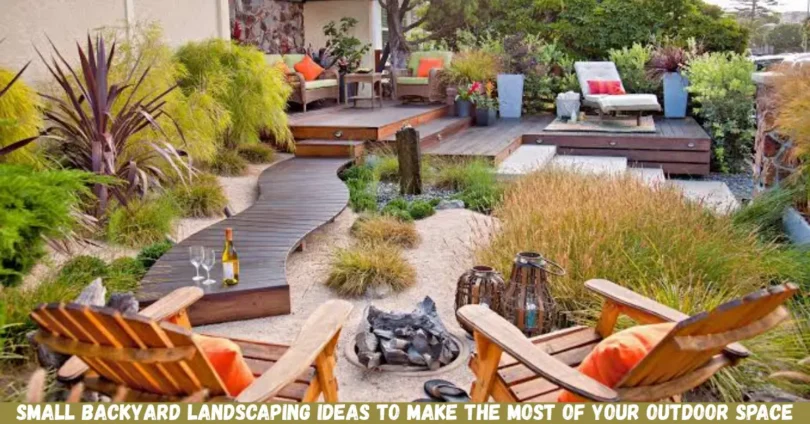
Small backyard landscaping ideas can help you turn a limited outdoor area into a beautiful, practical, and relaxing space. A small backyard does not need to feel crowded or boring. With the right layout, plants, materials, lighting, furniture, and vertical features, even a compact yard can become an enjoyable extension of your home.
The key is to use every part of the space intentionally. Instead of filling the backyard with too many plants or large furniture pieces, focus on creating clear zones, using vertical space, choosing appropriately sized features, and keeping the overall design visually simple.
This guide explores practical small backyard landscaping ideas for different budgets and styles. You will find ideas for plants, seating, privacy, pathways, patios, lighting, storage, low-maintenance landscaping, and common mistakes to avoid.
What Makes Small Backyard Landscaping Different?
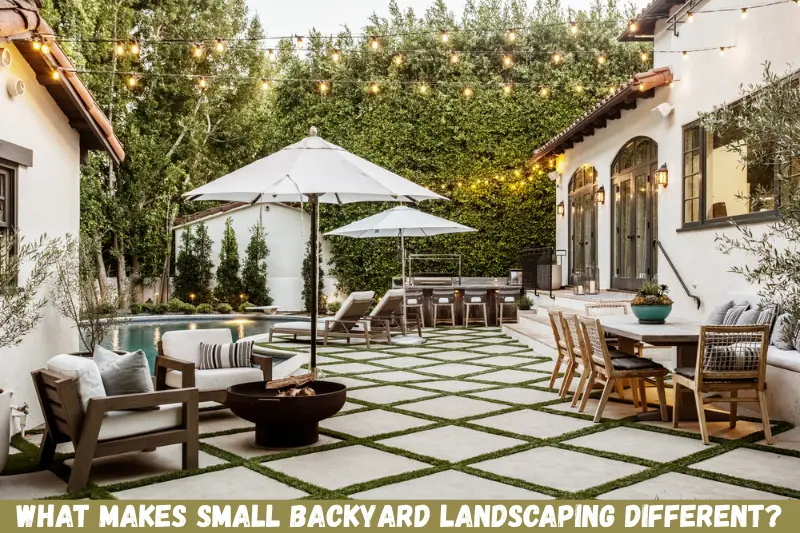
Small backyard landscaping is the process of designing and improving a limited outdoor area while making the space attractive, functional, and easy to maintain.
The biggest challenge is balancing several needs within a restricted footprint. You may want seating, plants, entertaining space, privacy, storage, and a lawn, but trying to include everything can make the backyard feel smaller.
A successful design usually prioritizes function, proportion, and visual flow.
For example, a compact backyard might combine:
- A small patio for seating
- Narrow planting beds around the edges
- Vertical plants for privacy
- A pathway made from stepping stones
- Wall-mounted or hanging planters
- Outdoor lighting
- A small storage solution
The result is a backyard that feels organized rather than overcrowded.
15 Small Backyard Landscaping Ideas
1. Create a Small Outdoor Living Area
One of the most useful small backyard landscaping ideas is to create a dedicated outdoor living area.
Instead of placing furniture randomly around the yard, choose one area for sitting, relaxing, dining, or entertaining. A compact patio or deck can establish this zone without requiring a large amount of space.
Consider using:
- A small outdoor sofa
- Two comfortable chairs
- A compact bistro table
- A built-in bench
- Folding furniture
- A small outdoor rug
Choose furniture based on the actual dimensions of your backyard. Oversized seating can quickly make a compact yard feel cramped.
2. Use Vertical Landscaping
When ground space is limited, look upward.
Vertical landscaping allows you to add greenery without taking up valuable floor area. Trellises, climbing plants, wall planters, hanging baskets, and vertical garden systems can all help.
A simple vertical garden can be placed against:
- A fence
- Exterior wall
- Garden shed
- Pergola
- Privacy screen
Climbing plants can also soften hard surfaces and add height to the landscape.
However, make sure the plants you choose are suitable for your climate and available sunlight.
3. Choose Plants That Fit the Space
Plant selection is especially important in a small backyard.
A common mistake is choosing plants based only on how they look when purchased. Some trees, shrubs, and vines can eventually become much larger than expected.
Before planting, check the mature height and spread of each plant.
For compact landscapes, consider plants that provide one or more useful characteristics:
- Compact growth
- Interesting foliage
- Seasonal flowers
- Evergreen coverage
- Fragrance
- Wildlife value
- Low maintenance
Planting fewer varieties repeatedly can also create a cleaner and more cohesive appearance.
4. Design a Small Patio
A patio can become the central feature of a compact backyard.
You do not necessarily need a large paved area. A modest patio can provide enough room for a table, chairs, grill, or lounge seating.
Possible materials include:
- Concrete
- Pavers
- Brick
- Natural stone
- Porcelain outdoor tiles
- Gravel with a defined border
Choose a material that complements your home and suits the amount of maintenance you are willing to handle.
A simple rectangular patio can work particularly well because it uses space efficiently.
5. Add a Narrow Garden Border
If you want greenery without sacrificing too much usable space, create planting borders along the edges of the backyard.
Instead of spreading plants throughout the center, use the perimeter for flowers, shrubs, ornamental grasses, or other suitable plants.
This leaves the middle area open for:
- Seating
- Children’s activities
- Pets
- Outdoor dining
- Entertaining
Narrow borders can also make the backyard look more structured.
6. Make a Small Backyard Feel Larger With Layers
Layering can create a sense of depth.
Place lower plants toward the front of a planting bed and taller plants toward the back. This creates visual separation and can make the garden appear deeper.
You can also create layers through:
- Ground-cover plants
- Medium-height flowers or grasses
- Shrubs
- Small trees or vertical structures
Avoid blocking the entire view with tall plants. Maintaining some open sightlines can help the space feel more expansive.
7. Install a Simple Pathway
A pathway can make a small backyard feel more organized and intentional.
You do not need a long walkway. Even a short path connecting the patio, garden, gate, or seating area can improve the layout.
Popular options include:
- Stepping stones
- Gravel
- Brick
- Pavers
- Concrete
For a compact yard, keep the pathway proportionate to the surrounding space. An overly wide path can consume valuable usable area.
8. Use Multi-Functional Furniture
Furniture that serves more than one purpose is extremely useful in small backyards.
For example, a storage bench can provide both seating and a place to keep gardening supplies. A folding table can be opened when needed and stored away afterward.
Other useful choices include:
- Benches with storage
- Folding chairs
- Stackable seating
- Extendable tables
- Small rolling carts
- Planter boxes that double as privacy screens
The goal is to reduce clutter while maintaining functionality.
9. Add Privacy Without Building a Massive Wall
Privacy is often important in backyard design, but a large solid fence or wall can make a small space feel enclosed.
Instead, consider lighter privacy solutions such as:
- Trellises
- Slatted screens
- Tall ornamental grasses
- Climbing plants
- Layered shrubs
- Pergolas
- Outdoor curtains
A partially open screen can provide privacy while still allowing light and air to move through the space.
10. Use Lighting to Extend the Backyard Into the Evening
Good outdoor lighting can make a small backyard more useful after sunset.
You can use different types of lighting for different purposes.
Path lighting helps illuminate walkways.
Accent lighting can highlight trees, plants, walls, or architectural features.
String lights can create a relaxed atmosphere around seating areas.
Wall lights can provide practical illumination near doors, patios, or outdoor kitchens.
Avoid using too many bright fixtures. A few strategically positioned lights can often produce a more comfortable result than excessive illumination.
11. Add a Small Water Feature
A water feature can become a focal point in a compact backyard without requiring a large pond.
Consider options such as:
- Small fountains
- Wall-mounted water features
- Container water gardens
- Compact bubbling features
Water features can add visual interest and movement, but they also require maintenance. Before installing one, consider cleaning, water management, electricity, and seasonal care.
12. Use Containers for Flexible Landscaping
Container gardening is one of the easiest ways to add plants to a small backyard.
Containers allow you to place greenery on patios, balconies, steps, corners, and other areas where traditional planting may not be practical.
You can use containers for:
- Flowers
- Herbs
- Small vegetables
- Ornamental plants
- Small shrubs
- Seasonal displays
Choose containers that match the scale of the space. A few larger, well-positioned containers can often look better than many tiny pots scattered everywhere.
13. Replace Some Lawn With Hardscaping or Planting Beds
A small lawn can be useful, but maintaining a large grass area may not make sense in a compact backyard.
You can replace portions of lawn with:
- Patio space
- Gravel
- Stepping stones
- Planting beds
- Ground covers
- Outdoor seating
This can create more functional zones while reducing the amount of grass that needs regular care.
If you still want lawn, keep it as a clearly defined area rather than allowing it to become an awkward leftover space between other features.
14. Create a Compact Outdoor Dining Area
You do not need a large backyard to enjoy outdoor meals.
A small table with two to four chairs can create a comfortable dining zone. A round table can sometimes work particularly well where movement around the furniture is important.
For very limited spaces, consider:
- Folding tables
- Wall-mounted tables
- Bistro sets
- Benches
- Extendable tables
Place the dining area close enough to the house to make serving food convenient.
15. Keep the Design Simple
Perhaps the most important small backyard landscaping idea is to avoid trying to do too much.
A compact yard can quickly become visually crowded when it contains too many colors, materials, plants, furniture pieces, and decorative objects.
A simple design might use:
- Two or three main materials
- A limited plant palette
- One primary seating area
- A defined pathway
- A consistent color scheme
- A few carefully selected decorative features
Simplicity can make the backyard easier to maintain and more visually cohesive.
Small Backyard Landscaping Ideas on a Budget
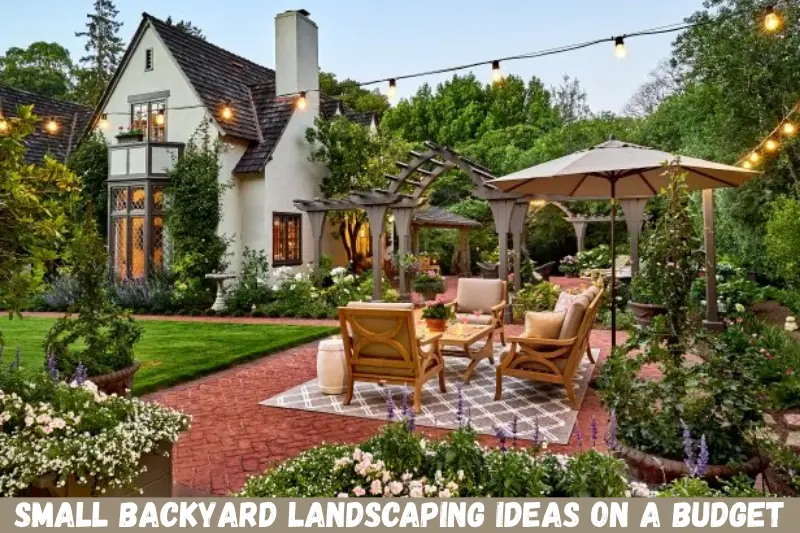
You do not need a large landscaping budget to improve a small backyard.
Start with changes that have a noticeable visual effect without requiring major construction.
Affordable ideas include:
- Refreshing existing planting beds
- Adding mulch
- Painting or staining a tired fence
- Using inexpensive containers
- Creating a DIY gravel seating area
- Installing solar garden lights
- Reusing suitable containers as planters
- Adding climbing plants to an existing fence
- Rearranging existing furniture
- Building a simple raised planter
A good strategy is to complete the backyard in stages.
Start with the layout, then improve planting, seating, lighting, and decorative details over time.
Low-Maintenance Small Backyard Landscaping Ideas
If you want a beautiful yard without spending hours maintaining it, focus on low-maintenance design from the beginning.
Choose plants that are naturally suited to your local growing conditions. Group plants with similar watering requirements together, and avoid creating unnecessarily complicated planting beds.
Other practical choices include:
- Mulched planting beds
- Durable hardscaping
- Perennial plants suited to the local climate
- Simple irrigation systems
- Limited lawn areas
- Easy-to-clean outdoor furniture
- Plants with appropriate mature sizes
Low maintenance does not mean maintenance-free. Every landscape needs some level of watering, pruning, cleaning, pest monitoring, or seasonal care.
How to Plan Small Backyard Landscaping Step by Step
A simple planning process can prevent expensive mistakes.
Step 1: Measure the Backyard
Measure the length and width of the available area.
Also identify:
- Doors and gates
- Existing trees
- Fences
- Drainage areas
- Utility features
- Sunny and shaded locations
Step 2: Decide How You Want to Use the Space
Ask what the backyard needs to accomplish.
Do you primarily want:
- A relaxing garden?
- An entertaining space?
- A dining area?
- A children’s play area?
- A pet-friendly yard?
- A low-maintenance landscape?
- More privacy?
Choose the most important functions first.
Step 3: Create Simple Zones
Divide the backyard into practical areas.
For example:
Zone 1: Patio and seating
Zone 2: Planting border
Zone 3: Small pathway
Zone 4: Vertical privacy feature
You do not need physical walls between every zone. Changes in materials, furniture placement, plants, or elevation can define different areas.
Step 4: Choose the Hardscape First
Decide where the patio, pathway, seating area, or other permanent features will go.
Hardscaping generally establishes the basic structure of the landscape, so it is useful to determine these elements before filling the space with plants.
Step 5: Select Plants Based on Conditions
Consider sunlight, soil, drainage, climate, mature size, and maintenance requirements.
Avoid selecting plants simply because they look attractive in a photograph. A plant that thrives in one region may struggle in another.
Step 6: Add Furniture and Decorative Features
Once the main layout is established, add seating, lighting, planters, screens, or other accessories.
Keep the scale appropriate to the backyard.
Step 7: Review the Space Before Buying More
Live with the design for a while.
You may discover that the backyard already feels complete and does not need additional decoration. This can prevent unnecessary spending and overcrowding.
Common Small Backyard Landscaping Mistakes
Choosing Oversized Plants
A plant that looks small at the garden center can eventually dominate a compact backyard.
Always consider mature dimensions before planting.
Using Too Much Furniture
Furniture should provide comfort without preventing people from moving easily through the space.
Measure furniture before purchasing it.
Ignoring Sunlight
Planting a shade-loving plant in full sun or a sun-loving plant in deep shade can create unnecessary maintenance problems.
Observe how sunlight changes throughout the day.
Creating Too Many Separate Areas
Too many small zones can make a backyard feel fragmented.
A few clearly defined areas are usually easier to use and maintain.
Using Too Many Different Materials
Mixing numerous paving styles, fence finishes, colors, and decorative elements can create visual clutter.
Choose a limited material palette and repeat it throughout the design.
Forgetting Drainage
Water should have an appropriate path away from structures and areas where standing water could cause problems.
Drainage should be considered before installing patios, retaining structures, planting beds, or other permanent features.
Planting Without Considering Maintenance
A beautiful garden can become frustrating if it requires more pruning, watering, or cleaning than you can realistically provide.
Design according to the amount of time you actually want to spend maintaining the yard.
Small Backyard Landscaping Ideas for Different Styles
Modern Small Backyard
A modern backyard often works well with clean lines, simple planting, and a restrained material palette.
Consider:
- Rectangular pavers
- Minimal furniture
- Architectural plants
- Simple planters
- Gravel
- Warm outdoor lighting
Cottage-Style Backyard
For a softer look, use informal planting and a mixture of flowers, foliage, and natural materials.
A small bench, climbing plants, containers, and winding planting borders can create a relaxed garden atmosphere.
Tropical-Inspired Backyard
If your local climate supports suitable tropical plants, use foliage plants, textured containers, and natural-looking materials.
Choose species according to your actual climate rather than copying a tropical garden design that may not be suitable for your region.
Low-Maintenance Backyard
Prioritize durable surfaces, appropriate plants, limited lawn, and simple irrigation.
This approach is particularly useful for homeowners who want an attractive garden without extensive weekly maintenance.
How to Make a Small Backyard Look Bigger
Several design principles can help create the impression of additional space.
Keep Sightlines Open
Avoid placing large objects directly in the center of the yard unless they serve an important purpose.
Use Similar Materials
Repeating the same paving or material from one zone to another can create visual continuity.
Draw the Eye Upward
Vertical plants, trellises, pergolas, and narrow trees can add height without using much ground space.
Use Curves Carefully
A gentle curve can make a garden feel less rigid, but excessive curves can consume space. Use them where they improve movement or visual flow.
Keep the Center Relatively Open
An open central area can make the entire backyard feel less crowded.
Use Scale Carefully
Small yards benefit from appropriately scaled furniture, planters, pathways, and structures. Large features can overwhelm the space.
Small Backyard Landscaping Ideas for Privacy
Privacy can be challenging when neighboring homes are close together.
Instead of automatically choosing the tallest possible fence, think about where privacy is actually needed.
For example, you may only need screening around the seating area.
Useful options include:
- Trellis panels
- Pergolas
- Slatted screens
- Layered plants
- Climbing vines
- Tall containers
- Outdoor curtains
Combining a physical screen with plants can provide privacy while making the feature feel more natural.
Frequently Asked Questions
What are the best small backyard landscaping ideas?
The best approach depends on how you want to use the backyard. Popular solutions include compact patios, vertical gardens, narrow planting beds, multifunctional furniture, container plants, simple pathways, privacy screens, and outdoor lighting. The most effective design usually combines several features while keeping the layout simple and appropriately scaled.
How can I make my small backyard look bigger?
Keep the center relatively open, use consistent materials, choose appropriately sized furniture, and create vertical interest with trellises or plants. Layering plants from low to tall can add depth, while clear sightlines help the space feel more open. Avoid filling every available area with furniture, decorations, or plants.
What plants are best for a small backyard?
The best plants depend on your climate, soil, sunlight, drainage, and available space. Generally, compact plants and varieties with manageable mature sizes are easier to incorporate into small landscapes. Before purchasing, check the plant’s mature height and spread and make sure its growing requirements match the conditions in your backyard.
How can I landscape a small backyard on a budget?
Start with layout improvements instead of buying many decorative items. You can refresh planting beds, add mulch, use containers, install simple lighting, create a small gravel area, or add plants to an existing fence. Completing the project in phases also allows you to spread costs over time while learning what the space actually needs.
How do I keep a small landscaped backyard low maintenance?
Choose plants suited to your local conditions, group plants with similar watering needs, limit lawn areas, use mulch where appropriate, and avoid overly complicated planting designs. Durable hardscaping and practical irrigation can also reduce routine work. Remember that low maintenance does not mean maintenance-free; plants and outdoor surfaces still need periodic care.
Conclusion
Small backyard landscaping ideas can transform a limited outdoor area into a comfortable, attractive, and functional part of your home. The key is not to fit as many features as possible into the yard. Instead, focus on using the available space intelligently.
Start by measuring the backyard and deciding how you want to use it. Create a simple layout, establish practical zones, choose appropriately sized plants and furniture, and use vertical space wherever possible. Add privacy features, lighting, pathways, containers, or a compact patio according to your needs and budget.
Most importantly, resist the temptation to overcrowd the space. A small backyard with a thoughtful layout, suitable plants, comfortable seating, and a few carefully selected features can feel much more useful than a larger yard without a clear design.