

Small apartment living ideas can transform a compact home into a comfortable, organised, and visually spacious place without requiring expensive renovations. The key is to use every available area thoughtfully while choosing furniture, storage, colours, and layouts that support everyday life.
For apartments in India, space planning becomes particularly important because one room may serve several purposes. A living room might double as a study area, dining space, or guest room, while bedrooms often need additional wardrobes and storage.
This guide covers practical ways to maximise floor space, organise belongings, select multifunctional furniture, improve lighting, and make a small apartment feel larger. Whether you live in a studio, 1BHK, compact 2BHK, or rented flat, these ideas can be adapted to different budgets and layouts.
What Makes a Small Apartment Comfortable?
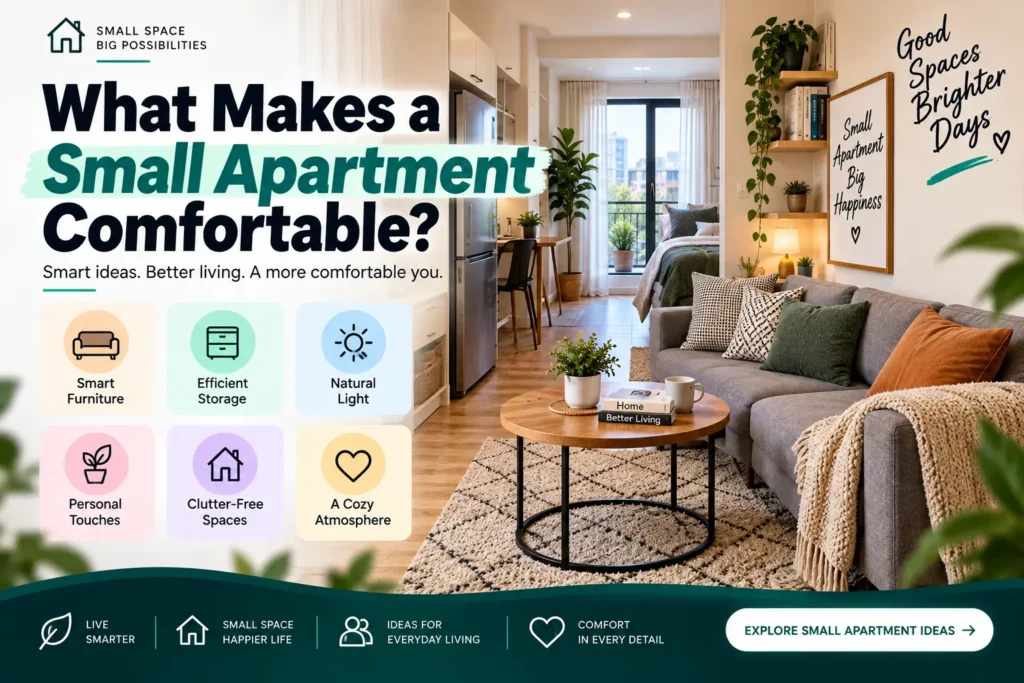
A comfortable small apartment is not simply one with fewer belongings. It is a home where movement is easy, essential items have designated places, and each area serves a clear purpose.
Good space planning begins by identifying how you actually use your home. Someone working remotely may need a proper desk, while a family may value additional seating, closed storage, or a flexible dining area.
Three principles make the biggest difference: reduce unnecessary clutter, use available vertical space, and select furniture according to the room’s actual dimensions. These choices help prevent a compact apartment from feeling crowded.
1. Plan the Apartment Before Buying Furniture
One of the most useful small apartment living ideas is to measure first and buy later. Oversized furniture can make even a well-designed apartment difficult to navigate.
Measure the length and width of each room along with doors, windows, electrical points, and permanent fixtures. Consider how much clearance is needed around beds, sofas, wardrobes, and tables.
Create Functional Zones
Instead of treating a small room as one open area, divide it according to activities. For example, a living room can contain a seating zone, a compact work corner, and a small dining area.
You do not necessarily need physical walls to create these divisions. Rugs, lighting, furniture placement, open shelves, or different wall treatments can visually define individual zones without making the room feel enclosed.
In a studio apartment, positioning a sofa with its back toward the sleeping area can create a subtle boundary while maintaining an open layout.
2. Choose Multifunctional Furniture
Multifunctional furniture allows one piece to perform two or more jobs, reducing the number of items competing for limited floor space.
A sofa-cum-bed, for example, can provide daytime seating and additional sleeping space when guests visit. Similarly, an ottoman with internal storage offers seating, storage, and sometimes a usable tabletop.
Useful multifunctional options include:
- Beds with built-in drawers or hydraulic storage
- Foldable or wall-mounted dining tables
- Nesting tables that can be separated when required
- Storage benches for entryways or balconies
- Sofa beds for occasional guests
- Ottomans with hidden compartments
- Desks that fold against the wall
- Extendable dining tables
Before buying convertible furniture, check how much space it requires when fully opened. A sofa bed that fits perfectly when closed may block a walkway when extended.
3. Use Vertical Space for Storage
When floor space is limited, walls become valuable storage areas. Vertical storage allows you to organise more items without filling the room with additional cabinets.
Tall wardrobes, wall-mounted shelves, overhead cabinets, and vertical bookcases make use of areas that otherwise remain empty.
Take Storage Up to the Ceiling
In Indian apartments, seasonal clothing, suitcases, extra bedding, festival decorations, and household supplies can occupy considerable storage space. Upper cabinets are useful for items that are not required every day.
Frequently used belongings should remain at comfortable reaching height. Less frequently used items can be placed higher, provided they are stored safely and can be accessed without unnecessary risk.
Use the Space Above Doors
The wall above a doorway is often overlooked. A properly installed shelf or cabinet can provide storage for lightweight, infrequently used belongings.
Keep the design visually simple so the additional storage does not make a compact room appear excessively heavy.
4. Make Small Rooms Look Bigger With Colour
Light and cohesive colour schemes can help a compact apartment feel more open because they reflect available light and reduce strong visual breaks.
White is not the only option. Warm off-white, cream, light beige, pale grey, muted green, and other soft shades can work well depending on the room’s natural light and furnishings.
Keep the Colour Palette Consistent
Using too many unrelated colours can visually divide an already small apartment. Instead, select a limited base palette and introduce stronger colours through cushions, artwork, rugs, plants, or decorative accessories.
This approach also makes it easier to update the apartment later without repainting entire rooms.
Dark colours are not completely unsuitable for small spaces. A darker accent wall or selected furniture piece can add depth, but balance it with adequate lighting and lighter surrounding surfaces.
5. Improve Natural and Artificial Lighting
Good lighting is one of the simplest ways to make a compact apartment feel more welcoming. Dark corners can make rooms appear smaller, while balanced lighting improves both visibility and visual depth.
Avoid blocking windows with tall furniture whenever possible. Lightweight curtains or blinds can provide privacy while still allowing daylight into the room.
Layer Your Lighting
Instead of relying entirely on one ceiling light, combine different lighting types.
General lighting provides overall illumination. Task lighting helps with activities such as reading, studying, cooking, or working. Accent lighting can highlight artwork, shelves, or architectural features.
Wall-mounted lights are particularly useful in small bedrooms because they can reduce the need for large bedside tables.
6. Add Mirrors Strategically
Mirrors can increase the sense of depth in a small room and help distribute available light. Their effectiveness depends more on placement than size alone.
A mirror positioned near or opposite a source of natural light can brighten the room. Mirrored wardrobe panels can also serve a practical purpose without requiring separate wall space.
Avoid filling every wall with reflective surfaces. One thoughtfully positioned large mirror often looks cleaner than several unrelated small mirrors.
7. Maximize Hidden Storage
Hidden storage keeps everyday belongings accessible while reducing visible clutter. This is particularly helpful when one room serves several functions.
The space beneath beds is an obvious example. Drawers, storage boxes, or hydraulic bed compartments can hold bedding, seasonal clothes, bags, or other household items.
Look for unused storage opportunities under sofas, inside benches, behind doors, beneath sinks, and above wardrobes.
Organise Storage by Frequency of Use
Storage becomes frustrating when commonly used items are difficult to reach. A simple approach is to organise possessions into three groups:
- Daily-use items: Keep them within easy reach.
- Occasional-use items: Store them in cabinets, drawers, or higher shelves.
- Seasonal items: Place them in labelled boxes or long-term storage areas.
Labelling closed boxes can save time, particularly when several similar containers are stored together.
8. Design a Small Living Room Carefully
A compact living room should prioritise comfortable movement and appropriate furniture scale. One correctly sized sofa can often work better than several bulky chairs.
Choose furniture with slim profiles or exposed legs when suitable. Being able to see some floor underneath furniture can create a lighter visual effect.
Wall-mounted television units can also reduce the need for deep entertainment cabinets. Keep cables organised to maintain a clean appearance.
Avoid Pushing Everything Against the Walls
Although placing every item against a wall may seem like the best way to maximise space, it can sometimes create an awkward empty centre.
Experiment with furniture placement. Even moving a sofa slightly away from a wall can improve proportions and create room for a narrow console or hidden cable management.
9. Create a Practical Small Bedroom
A small bedroom should focus primarily on sleep, clothing storage, and easy movement. Start with the bed because it usually occupies the largest amount of floor space.
Choose a bed size that fits the room comfortably rather than automatically selecting the largest option available. Storage beds can provide significant additional capacity where separate cabinets would be impractical.
Use Bedside Alternatives
Traditional bedside tables are not always necessary. Floating shelves, narrow wall-mounted drawers, or headboards with integrated ledges can hold essentials while keeping the floor clear.
Wall-mounted reading lights can further reduce the amount of furniture required beside the bed.
Sliding wardrobe doors can also be useful where there is insufficient clearance for hinged doors, although the right choice depends on wardrobe design and maintenance preferences.
10. Make a Compact Kitchen More Efficient
A small kitchen works best when storage follows the cooking process. Frequently used utensils and ingredients should be close to the areas where they are actually needed.
Use cabinet interiors, drawers, vertical dividers, and wall-mounted organisers carefully. Avoid overcrowding the countertop because clear preparation space is particularly valuable in compact kitchens.
Use Cabinet Doors Wisely
The inside of selected cabinet doors can hold lightweight organisers for items such as cleaning supplies or small kitchen accessories. Make sure any added organiser does not interfere with shelves or hinges when the door closes.
Drawer dividers can prevent utensils from becoming disorganised, while vertical dividers work well for trays, chopping boards, and flat cookware.
11. Build a Compact Work-From-Home Area
You do not always need a separate room to create a productive workspace. A quiet corner with adequate lighting, a suitable chair, and a properly positioned work surface may be sufficient.
Wall-mounted or narrow desks work particularly well in compact apartments. Shelves above the desk can provide storage without increasing the footprint.
Avoid creating a permanent office in the middle of your primary relaxation area when another suitable corner is available. Separating work visually can make it easier to switch between work and personal time.
12. Use Balconies Without Overcrowding Them
Balconies in Indian apartments can become valuable extensions of indoor living space, but they should remain practical and safe.
Compact outdoor chairs, foldable tables, and a small number of suitable plants can create a pleasant seating area. Vertical plant stands can help when floor area is limited.
Before installing heavy planters, permanent fixtures, or enclosed structures, consider building rules, drainage, weather exposure, and safety requirements.
13. Reduce Visual Clutter
Visual clutter occurs when too many objects compete for attention. Even an organised apartment can feel crowded when every wall, shelf, and surface is completely filled.
Leave some surfaces intentionally empty. Group decorative objects instead of distributing them randomly throughout the room, and use closed cabinets for items that do not need to remain visible.
Cable management also matters. Television wires, chargers, extension cords, and router cables can quickly make a small room look disorganised.
14. Use Doors and Corners More Effectively
Corners and doors are often overlooked when planning storage. With the right solution, these areas can provide useful functionality without consuming central floor space.
Over-door organisers may work for lightweight items where suitable. Corner shelves can display books, plants, or small decorative pieces.
A narrow entryway can accommodate hooks, a compact shoe cabinet, or a wall-mounted key organiser. However, entrances and walkways should always remain clear enough for safe movement.
15. Declutter Before Adding More Storage
Buying more storage is not always the solution to a crowded apartment. Sometimes it simply creates additional places to keep things that are no longer needed.
Review clothes, kitchen equipment, paperwork, décor, electronics, and miscellaneous household items periodically. Keep what you genuinely use, need, or value.
A practical rule is to avoid buying an organiser until you know exactly what it needs to hold. This prevents unnecessary baskets, cabinets, and storage boxes from becoming clutter themselves.
Small Apartment Solutions Compared
| Solution | Best For | Space Benefit | Main Consideration |
|---|---|---|---|
| Storage bed | Bedrooms | Uses space beneath the mattress | Access mechanism and weight |
| Wall-mounted desk | Work areas | Keeps floor area relatively open | Requires secure installation |
| Foldable dining table | Living/dining areas | Can be closed when unused | Wall clearance and seating |
| Tall cabinets | Most rooms | Uses vertical space | Upper shelves can be harder to reach |
| Sofa bed | Living rooms | Combines seating and guest sleeping | Needs space when opened |
| Sliding wardrobe | Compact bedrooms | No hinged-door clearance needed | Track maintenance |
| Floating shelves | Empty walls | Adds storage without floor furniture | Weight limits and installation |
Common Small Apartment Living Mistakes
One common mistake is buying furniture based on appearance without checking dimensions. A beautiful sofa or dining table can become inconvenient if it blocks movement or dominates the room.
Another mistake is assuming every empty space needs decoration or storage. Negative space is important because it gives the eye a place to rest and helps a small room feel less crowded.
Other problems include excessive open shelving, too many small furniture pieces, poor lighting, blocked windows, uncontrolled cable clutter, and storing everyday essentials in difficult-to-access locations.
The best small apartment living ideas solve genuine problems rather than simply adding more objects.
Frequently Asked Questions
How can I make a small apartment look bigger?
Use a consistent light colour palette, keep windows relatively unobstructed, improve lighting, reduce visual clutter, and choose furniture that matches the scale of the room. Strategically placed mirrors can increase the sense of depth. Keeping some floor visible and maintaining clear walkways can also make a compact apartment feel more open.
What furniture is best for a small apartment?
Multifunctional and appropriately sized furniture generally works best. Consider storage beds, nesting tables, sofa beds, foldable dining tables, wall-mounted desks, and storage ottomans. Measure the room before purchasing anything, including the furniture’s dimensions when opened or extended, so it does not interfere with doors or walkways.
How can I add more storage to a small Indian apartment?
Start by using existing underutilised areas, including space beneath beds, above wardrobes, inside cabinet doors, and on suitable walls. Tall cabinets can use vertical space efficiently. Store daily items at reachable heights and reserve upper storage for seasonal clothes, luggage, extra bedding, and belongings used less frequently.
How can I decorate a small apartment on a low budget?
Begin by rearranging existing furniture and decluttering before buying anything new. Paint, affordable cushion covers, simple artwork, plants, better lighting, and one strategically positioned mirror can make a noticeable difference. Focus your budget on functional improvements first, especially storage and lighting, rather than filling the apartment with decorative accessories.
Is open shelving good for small apartments?
Open shelving can work well because it provides storage without the visual weight of some large cabinets. However, too many exposed objects can create visual clutter. Use open shelves selectively for attractive or frequently used items, while keeping less visually appealing belongings inside closed cabinets, drawers, baskets, or labelled storage boxes.
Conclusion
The most effective small apartment living ideas focus on using space intelligently rather than trying to fit more things into a limited area. Start with accurate measurements, identify the functions each room needs to support, and remove unnecessary clutter before purchasing additional furniture or storage.
Use vertical and hidden storage, choose multifunctional furniture, maintain clear walkways, improve natural and artificial lighting, and keep colours and décor visually consistent. In Indian apartments, practical solutions such as storage beds, tall cabinets, foldable tables, compact workstations, and organised balconies can make everyday living significantly easier.
Your best next step is simple: choose the room that currently feels most crowded, measure it, identify three items that do not need to be there, and then solve its biggest storage or layout problem first. Improving a small apartment one area at a time is usually more practical than redesigning the entire home at once.